Scam Alert
Hello and welcome to Scam Or Reliable.

Scam Alert
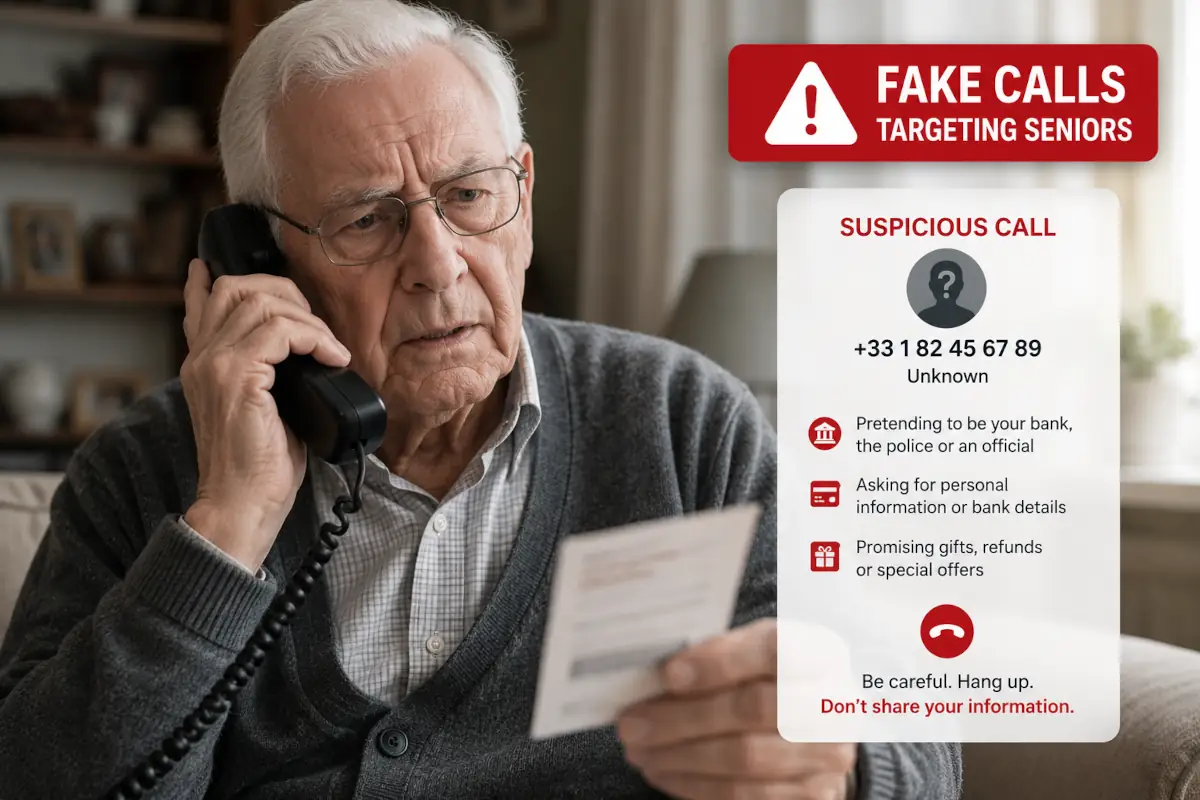
Scammers target older people by phone by pretending to be a relative, a bank, an official service or a trusted professional.
Stay alert: these calls often play on fear, urgency or isolation to trigger a quick reaction.
This scam mainly targets older people, but it can affect anyone who is vulnerable when faced with a pressing or highly credible call.
The fraudster is trying to obtain a payment, banking codes, personal information or access to an account.
The scammer calls while pretending to be a bank adviser, a police officer, an administrative officer, a technician, a delivery driver or sometimes a family member in difficulty.
They create an urgent scenario: a hacked account, a card that needs to be blocked, a parcel that must be paid for, a relative in danger, a debt to settle or an intervention to confirm.
Their goal is to push the victim into acting without thinking, sharing codes, making a bank transfer, handing over a bank card or calling back a fraudulent number.
Warning signs: unexpected call, alarmist tone, request for secrecy, immediate pressure, request for codes, urgent payment, refusal to allow time to check, unknown or spoofed number, wording designed to trigger fear or guilt.
A serious call should never force you to act within the minute, or to provide sensitive information over the phone.
If in doubt, hang up, check through an official channel and ask a relative for advice before making any decision.
Report this type of scam on an official platform such as Report Fraud (UK), the National Cyber Security Centre (UK), ReportFraud.ftc.gov (US), the FBI Internet Crime Complaint Center (US) or the competent national service in your country, then inform the older people around you to help reduce the number of victims.
To better understand the mechanisms used by scammers and learn how to react, these resources may help:
Free tools are also available to guide you, check a situation or train yourself to recognise traps:



Consumer Reviews and Testimonials