Scam Alert
Hello and welcome to Scam Or Reliable.

Scam Alert
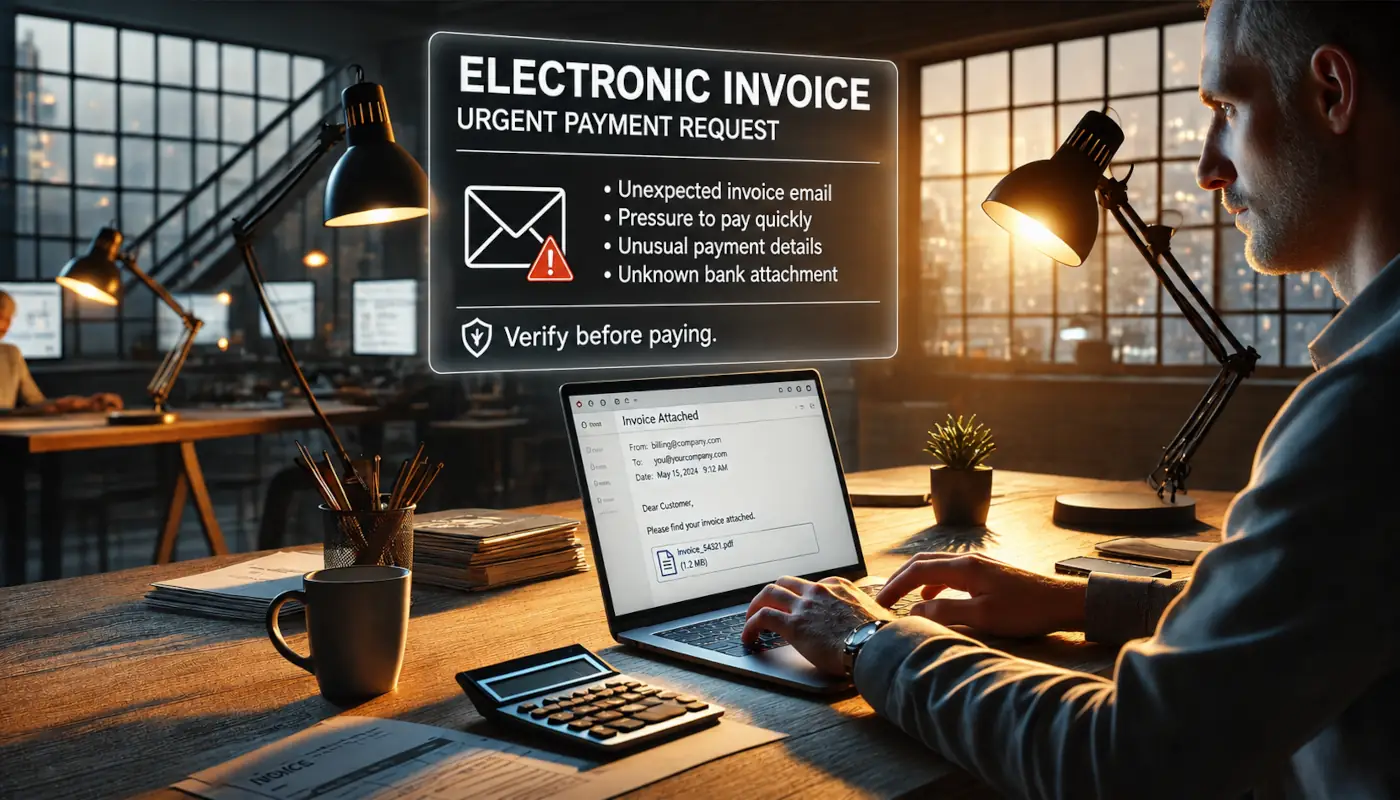
Scammers take advantage of the transition to electronic invoicing to send fake invoices, alter bank details or impersonate a supplier.
Stay vigilant: an apparently normal invoice may hide an attempt to divert a payment.
This scam targets individuals, self-employed people, associations and businesses that receive or pay invoices digitally.
The trap consists of making a real or fake invoice be paid into a bank account controlled by the fraudsters.
Scammers send an invoice by email, through a fake portal or by pretending to be a supplier, service provider, property manager, administration or accounting department.
In some cases, they intercept a real conversation and simply replace the payment bank details with their own.
Their goal is to make the request credible so that the payment is made without any further verification.
Warning signs: sudden change of bank details, unexpected invoice, slightly different email address, urgent tone, suspicious attachment, unusual amount, new payment portal, bank details changed without official confirmation.
Electronic invoicing makes exchanges easier, but it can also be exploited by fraudsters to make their requests more credible.
Before any payment, especially in the case of new bank details or an unexpected invoice, direct verification remains essential.
Report this type of scam on an official platform such as Report Fraud (UK), the National Cyber Security Centre (UK), ReportFraud.ftc.gov (US), the FBI Internet Crime Complaint Center (US) or the competent national service in your country, then warn your relatives, colleagues or partners to prevent further fraudulent payments.
To better understand the right reflexes to adopt when faced with suspicious invoices and payment requests, these resources may help:
Free tools are also available to check a situation, report a fraud or train yourself to spot traps:



Consumer Reviews and Testimonials