Scam Alert
Hello and welcome to Scam Or Reliable.

Scam Alert
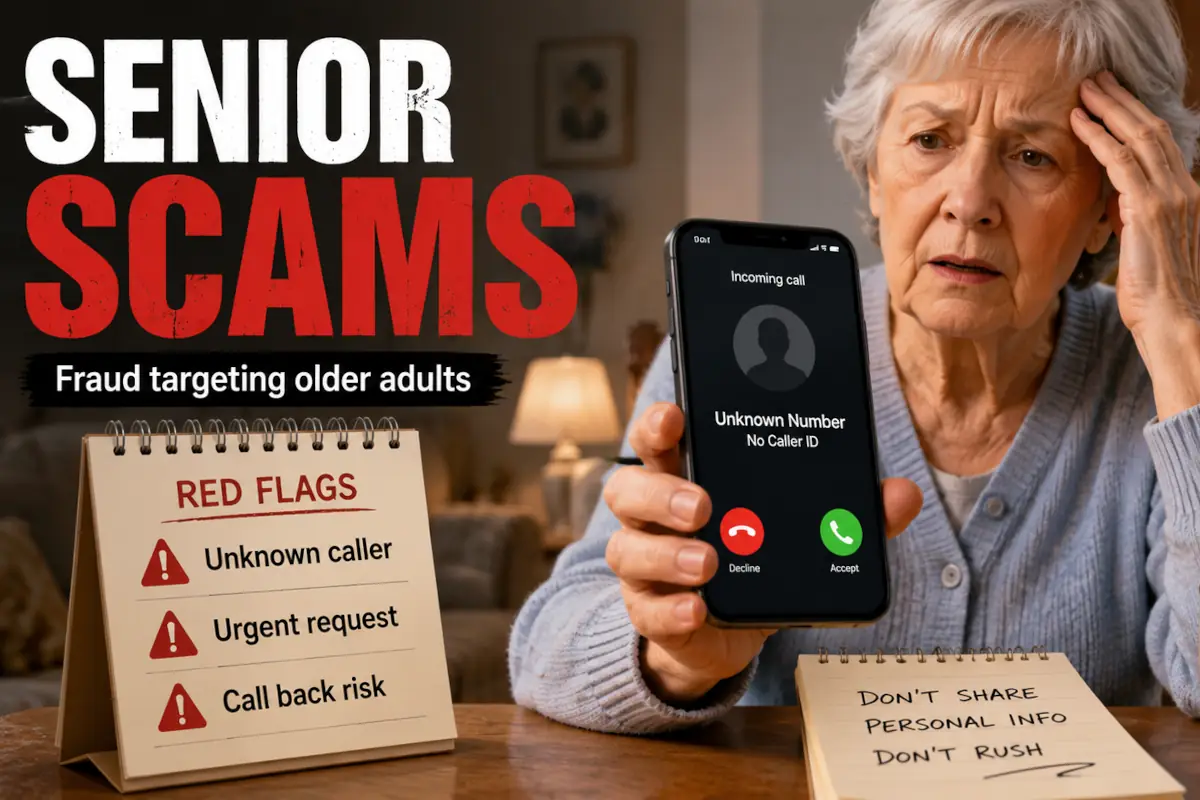 Scams targeting older people often rely on two levers: trust and a sense of urgency. They take many forms — a fictitious loved one in distress, a supposed worried bank adviser, or even a fake police officer, technician or official turning up at the home.
Stay vigilant: a few simple reflexes can often interrupt the scam before a payment is made or sensitive information is shared.
Fraudsters pose as trusted people or organisations in order to obtain money, banking data, security codes or access to their victim’s home.
The scammer usually creates an urgent situation: a loved one supposedly has a problem, bank fraud is said to be in progress, a computer is supposedly hacked or a home intervention is claimed to be necessary. The call, SMS or visit may seem credible, and some variants even use an imitated voice to strengthen the illusion. Above all, the fraudster seeks to prevent the victim from checking the situation with a relative, their bank or the organisation concerned.
Warning signs: A request for money presented as extremely urgent, a caller who asks for a PIN, password or code received by SMS, a supposed adviser or police officer who announces that a courier will be sent to collect a bank card, a loved one suddenly communicating from a new number and asking for money, a request to install software allowing remote control of the computer or phone, a person who demands that the situation remain secret or refuses to let you call someone to check, an unexpected visitor invoking a repair, inspection or urgent intervention to enter the home.
A familiar voice, a credible phone number or knowledge of some personal information is no longer enough to prove the identity of the person contacting you. If in doubt, interrupt the conversation and always verify the situation through another means.
If money, a card or a bank account is involved, contact your financial institution immediately. Also keep SMS messages, emails, phone numbers, screenshots and other elements that may serve as evidence.
Depending on your country, then report the attempt to the police or the competent official service, such as Report Fraud (UK), ReportFraud.gov (US) or IdentityTheft.gov (US) if identity theft is involved. Our anti-fraud reporting assistant can help you identify the appropriate steps in the United Kingdom or the United States. Also remember to warn those around you: a simple warning can prevent another person from falling into the same trap.
To strengthen your reflexes against scam attempts, several resources can also help:
👉 Consult our practical guide for fraud victims
👉 Test your vigilance with our anti-fraud simulator
👉 Discover the essential reflexes to avoid scams



Consumer Reviews and Testimonials