Blog post: Online security
Hello and welcome to Scam Or Reliable!

Blog post: Online security
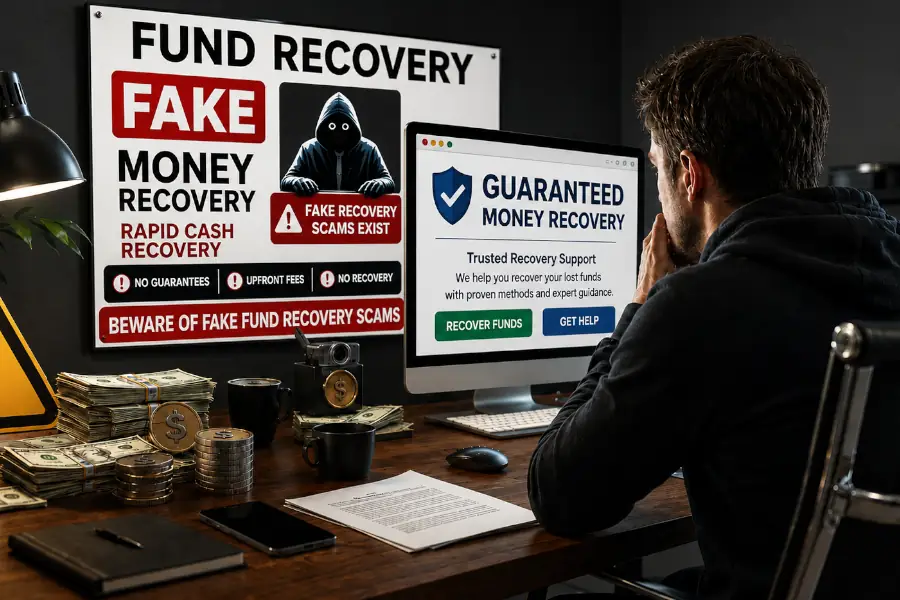 After a scam, the search for a quick solution can expose the victim to a second trap. Fake websites, pseudo-firms, private agents or recovery services promise to recover lost money, sometimes using very reassuring language. Their goal is often to extract more payments, personal data or banking information. This fraud is particularly dangerous because it targets people who have already been weakened by an initial loss.
Fake money recovery services often appear after an investment scam, a cryptocurrency scam, a fake shop, a fake broker, a romance scam or the impersonation of a bank adviser. The victim is then looking for a remedy, a refund or concrete help. Fraudsters exploit precisely this moment of doubt, urgency and hope.
The principle is simple: make people believe that a specialist can recover the lost funds. The site may present itself as an investigation company, a legal firm, a mediation service, a private anti-fraud unit or even a structure linked to a public authority. Some use a serious tone, detailed forms, fake testimonials and legal language to appear credible.
The US Federal Trade Commission describes this type of fraud as a refund or recovery scam. The scenario often relies on a promise to recover the funds, followed by a request for upfront payment, processing fees or personal information. Legitimate help should never begin with pressure to pay in order to unlock a supposed refund.
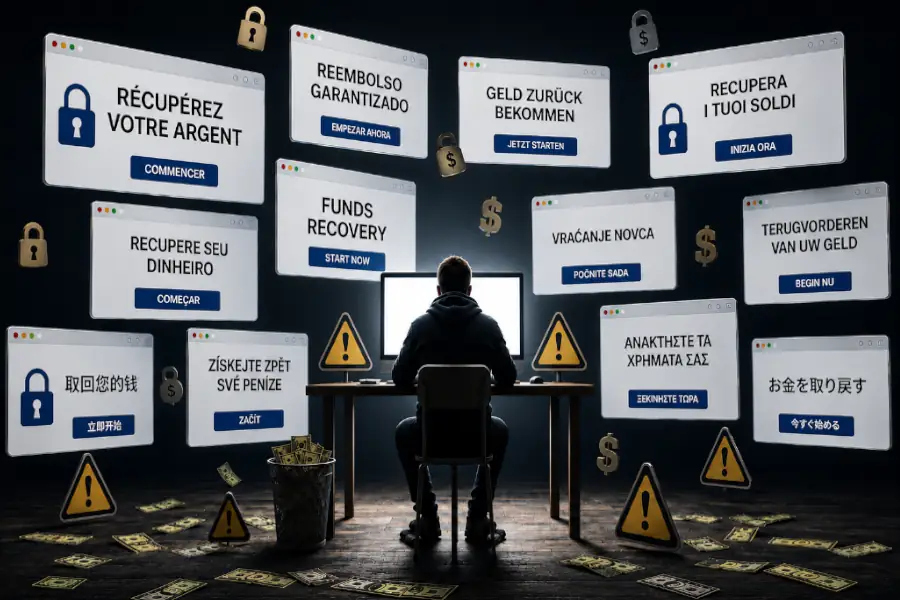 Victims may come across these sites while spontaneously searching online for a solution. Ads, sponsored results, optimized pages or comments posted under testimonials may direct them to fake services. The trap is all the more effective because the person uses terms such as “recover money from scam”, “crypto refund”, “fraudulent broker complaint” or “help for trading scam victim”.
Scammers may also contact the victim directly. This can happen by email, phone, messaging app, social media or forum. Some claim to have traced the funds, to have an open case file already, or to know the original scammer. In the more structured frauds, victim data may circulate between criminal groups, which makes the second contact very convincing.
The FBI IC3, for example, warned about scammers pretending to be its online complaint center in order to revictimize people who had already lost money. The fake contact may claim that funds have been recovered, but then ask for financial information, a tax or a payment to finalize the operation.
Fake money recovery websites use wording designed to reassure. They promise expertise, a quick procedure, a high success rate or a free analysis. The problem is not always the first contact, but what follows: a payment request, pressure, an exaggerated guarantee or the impossibility of verifying the real identity of the service.
A serious operator remains cautious about the chances of recovery. They explain the limits, the possible steps, the timeframes, the evidence required and the competent authorities. By contrast, a fraudulent service often turns an uncertain situation into an almost certain promise. It may claim that the money has been located, frozen in an account, available after payment of a tax or recoverable through a confidential procedure.
The following statements should raise alarm bells, especially when they are linked to an upfront payment:
 Some fraudsters create fake law firms, mediators, financial investigators or international debt recovery specialists. The site may display a team, professional photos, an address, legal notices and references to authorities. These elements are not enough to prove the real existence of the service.
In cryptocurrency-related scams, the promise is often technical. The fake expert claims to be able to trace transactions on the blockchain, identify wallets, freeze funds or trigger a restitution. Tracing may exist in certain professional or judicial settings, but an unknown site promising rapid recovery in exchange for payment should be treated with extreme caution.
The FBI IC3 has also reported fake legal firms targeting victims of cryptocurrency scams. These actors may impersonate public bodies, legal professionals or real companies in order to obtain new payments or sensitive data.
A request for fees before any recovery is the most important warning sign. It may be presented as administrative fees, a tax, a deposit, a commission, account validation, case activation or a payment to an intermediary. The vocabulary changes, but the logic remains the same: the victim has to pay before obtaining a result that cannot be verified.
You should also be wary of requests for payment in cryptocurrency, prepaid card, international transfer, payment app or a transfer that is difficult to cancel. These methods are often chosen because they make recourse more difficult. A service that imposes an unusual payment channel or refuses traceable and regulated methods adds an extra risk.
Even when a contract or invoice is provided, caution is still necessary. Fraudsters know how to produce clean-looking documents. The key question is not just the administrative appearance, but the verifiability: real identity, registration, address, professional status, track record, independent reviews, official number and consistency with the competent authorities.
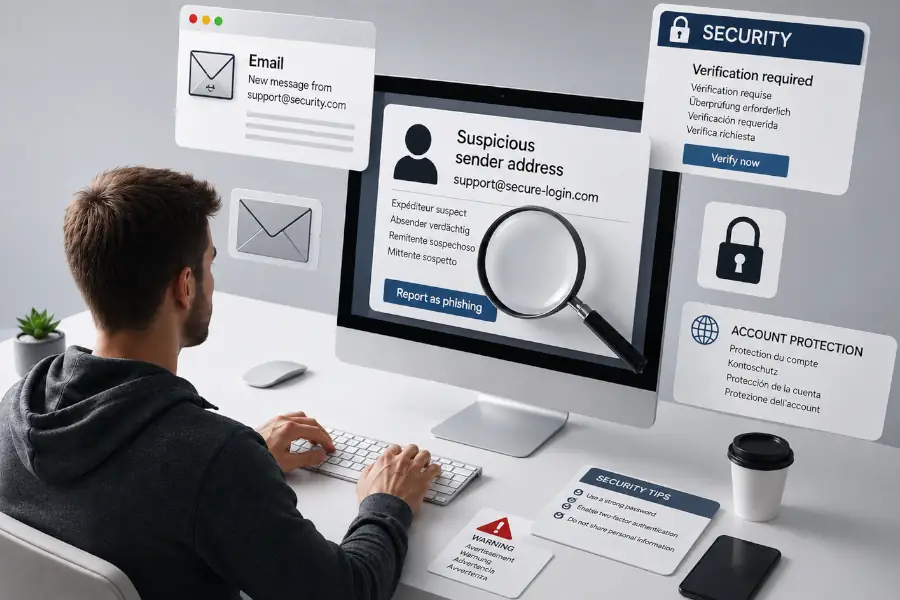 Before sending a document, evidence, identity document or payment, you need to verify the real existence of the service outside its own website. A search on the name, address, telephone number and managers may reveal inconsistencies. It is also useful to search the name together with terms such as “scam”, “complaint”, “review” or “recovery scam”.
Be wary of reviews that look too perfect or too recent. Some fake services publish many positive testimonials that are often vague, repetitive or concentrated on just a few platforms. A good reflex is to check whether the team photos look generic, whether the address really corresponds to a professional activity and whether the phone number leads to an identifiable organization.
If in doubt, it is better to contact an official source directly or a professional whose details can be verified through a recognized directory. In the United Kingdom, the National Cyber Security Centre (UK) can help guide victims of phishing and scam websites, while Action Fraud (UK) is the official reporting service for fraud and cyber crime. In the United States, ReportFraud.ftc.gov (US) can be used to report scams and consumer fraud, while FBI IC3 (US) is the official channel for reporting internet crime.
If you have paid a suspicious recovery service, you need to stop making any further payments. Fraudsters may announce one final fee, a procedural error or an additional tax. This logic of successive payments is precisely one of the mechanisms of the fraud.
You should then gather the evidence: website address, emails, phone numbers, messages, invoices, contracts, screenshots, bank details, crypto wallet addresses and payment receipts. The more complete the file, the more usable it will be for a bank, a payment platform, an authority or a complaint.
It is also important to alert your bank quickly if banking details have been shared or if a payment has been made. Depending on the method used, some steps may be attempted, even though recovery is never guaranteed. Finally, you must remain vigilant after reporting it: someone who has already been targeted may receive new fraudulent offers under another identity.
Fake money recovery websites exploit a particularly sensitive moment: the point at which a victim is trying to repair a loss. Their language may seem professional, legal or technical, but the promise of recovering funds quickly in exchange for upfront payment must always be treated as a warning sign. The more certain, urgent or confidential the promise seems, the greater the caution should be.
Before trusting an unknown service, it is useful to review the right reflexes for avoiding online traps. If you have already sent money or data, the support path for scam victims can help organize the first steps. To identify the right channel depending on the situation, the tool for directing users to the appropriate reporting channels can also be useful.