Blog post: Online security
Hello and welcome to Scam Or Reliable!

Blog post: Online security
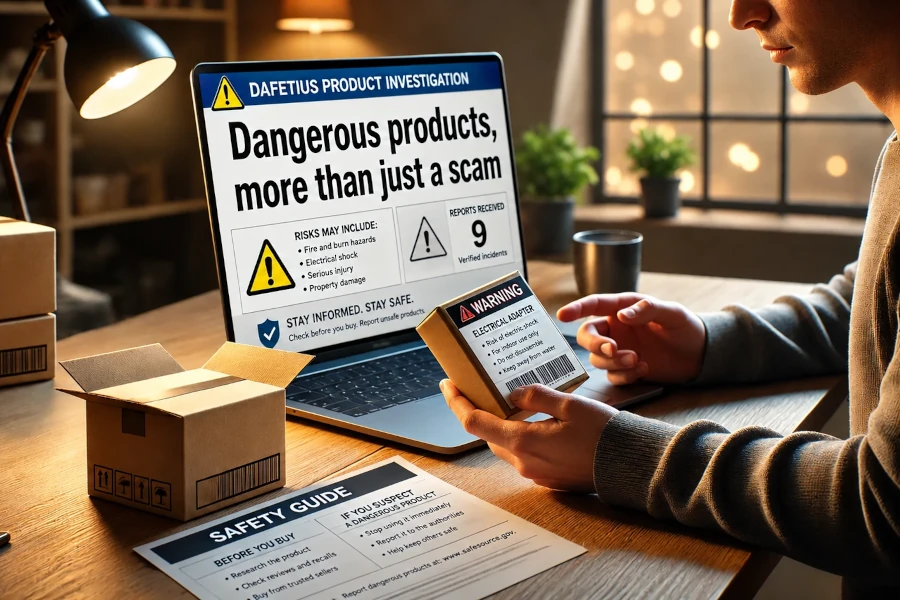 Buying on a marketplace does not only present a risk of a fake seller, a parcel never delivered or a counterfeit product. Some products can also be non-compliant, poorly labelled, poorly designed or genuinely dangerous for the user. Toys, chargers, cosmetics, electrical accessories, jewellery or children’s items can pose safety problems that are difficult to spot before purchase. The danger then goes beyond the simple loss of money: it can affect health, home safety or the safety of loved ones.
A marketplace often gives the impression of buying from a large, well-known site. Yet, in many cases, the platform mainly acts as an intermediary between the consumer and a third-party seller. This seller may be based in another country, change name quickly, offer a very broad catalogue and disappear after a few weeks.
The consumer sees a reassuring interface, reviews, attractive photos and sometimes fast delivery. But these elements do not prove that the product complies with the applicable safety requirements. An item may be delivered correctly, visually match the photo and still remain dangerous.
Recent product safety warnings in the UK and the United States show that the issue goes far beyond low prices or poor quality. Official recall databases regularly list unsafe electrical items, toys, cosmetics, children’s products and everyday goods sold online. A product may therefore arrive correctly, match the photos and still present a real risk for the user.
Not all products sold online present the same level of risk. A simple decorative accessory does not have the same potential consequences as a charger, a toy for a young child, a cosmetic product or protective equipment. The more an item concerns the body, electricity, children or safety, the higher the level of caution should be.
Electrical products are particularly sensitive. A poorly designed charger, power strip, hair dryer, lamp or small appliance can present a risk of overheating, burns, electric shock or fire. A very low price must therefore be weighed against the possible consequences of a manufacturing defect.
Children’s items also require heightened vigilance. Small detachable parts, overly long cords, fragile materials, chemical substances or the absence of clear warnings can create risks that photos do not reveal. The same reasoning applies to jewellery, cosmetics, textiles, sports accessories and objects in direct contact with the skin.
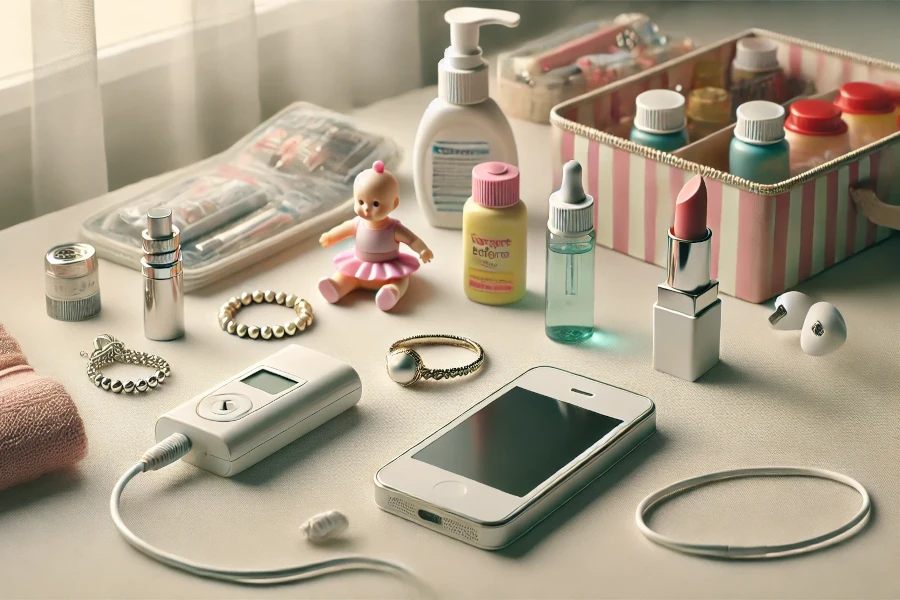
A product page may look complete without being reliable. The photos may be polished, the description detailed and the reviews numerous. But essential information about compliance, standards, the manufacturer, importer or safety instructions may be absent, incomplete or difficult to verify.
Product markings and safety claims are often misunderstood. In the UK, CE or UKCA markings indicate that the manufacturer believes the product meets the applicable requirements, but they should not be treated as proof that every item has been individually tested by a public authority before sale. For US readers, the same caution applies to safety claims or certification marks shown on a marketplace listing: they should always be checked against the seller, manufacturer and product documentation.
The price is also misleading. A cheap product is not automatically dangerous, but an abnormally low price on a technical item should attract attention. The savings may come from simpler manufacturing, but also from missing instructions, insufficient testing, fragile components or a seller who is difficult to pursue in the event of a problem.
Before buying, certain details should be examined carefully. The first question is the seller’s identity. A generic name, no address, vague contact details or a recent seller page make remedies more difficult. A well-known marketplace does not automatically turn every third-party seller into a reliable actor.
The second question concerns the product page. A sensitive item should provide clear information: technical characteristics, recommended age for a toy, composition for a cosmetic product, electrical power, instructions for use, warnings, manufacturer or importer. If these elements are absent, poorly translated or inconsistent, it is better to avoid the purchase.
The third question concerns reviews. Hundreds of very short, repetitive reviews or reviews accompanied by generic photos do not guarantee the safety of a product. Reviews may mention fast delivery or a correct appearance, without having tested durability, composition or real risks.
Before buying a potentially sensitive product, it is useful to compare several sources. Is the same item sold by an identifiable brand? Is there an official manufacturer’s site? Does the seller clearly identify the manufacturer, importer or responsible business? Are the technical characteristics consistent with the announced use?
For UK readers, the official Product Safety Alerts, Reports and Recalls service allows users to search for unsafe products, recalls and product safety reports published by the Office for Product Safety and Standards.
For US readers, the Consumer Product Safety Commission recalls page lists official recalls and product safety warnings. The SaferProducts.gov database also allows consumers to search for unsafe product reports before buying.
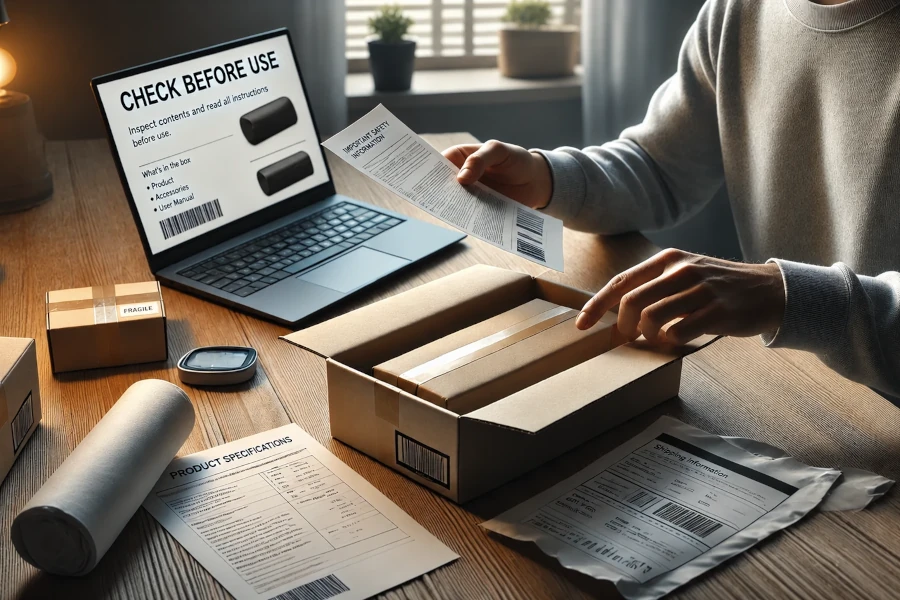 Caution does not stop at payment. Upon receipt, you should check the condition of the packaging, the presence of instructions, warnings, unusual smell, detachable parts, apparent solidity and the consistency between the product received and the listing. A damaged, poorly assembled electrical item or one supplied with a dubious adapter should not be used.
For a toy or item intended for a child, the check must be even stricter. Small parts, cords, sharp edges, accessible batteries, magnets, elements that come off easily and age warnings must be checked. A product that looks fun or attractive can become dangerous if its design is insufficient.
For cosmetics or products applied to the skin, you should check the composition, manufacturer information, the presence of proper packaging and the absence of visible alteration. In the event of an unusual reaction, suspicious smell or incomplete labelling, use should be discontinued.
If a product seems dangerous, you should not continue using it “to test it”. Unplug the device, keep the item away from children, keep the packaging and take photos. It is useful to keep the invoice, product page, seller’s name, listing URL and exchanges with customer service.
The seller and the platform should be contacted, but this is not always enough. In the UK, unsafe products can be reported through the official guidance provided by GOV.UK, which directs consumers to the appropriate channel depending on whether they are in England, Wales, Scotland or Northern Ireland.
In the United States, unsafe consumer products can be reported through SaferProducts.gov. For recalls and safety warnings, consumers can also consult the CPSC recall database. For a reaction or problem linked to a cosmetic product, the FDA provides a dedicated cosmetic product complaint page.
Marketplaces offer fast access to thousands of products, but this convenience should not make people forget the issue of safety. The problem is not only knowing whether the seller will deliver the item, but also whether the object received can be used without risk. For electrical products, toys, cosmetics, children’s items or protective equipment, caution should be higher than for an ordinary purchase.
Before buying, it is better to apply the essential verification rules before an online order. To boost safety, the practical advice to avoid digital traps remains useful.
👉 To get a quick opinion, our automated AI analysis service generates a real-time reliability summary!
👉 For scam victims, our interactive guide for fraud victims directs users to the urgent actions to take!
👉 To report a scam, our fraud reporting assistance tool helps find the right channel!
👉 To strengthen your reflexes, our interactive scam simulator improves your reactions to fraud!
👉 To check a link, our suspicious URL analysis tool provides an initial diagnosis!