Product Review
Hello and welcome to Scam Or Reliable.

Product Review
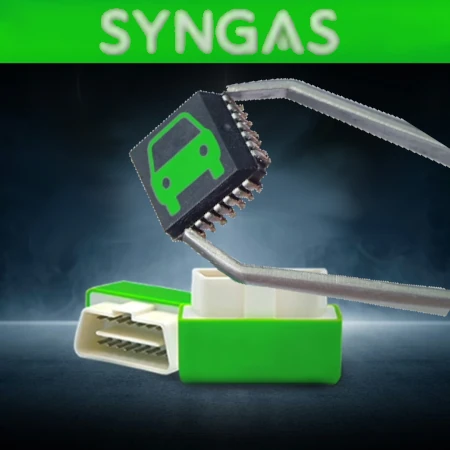
Product name : SynGas
Brand : SYNGAS
Responsible : Neracom LTD.
Official Website : get-syngas.com
Language : English
Tiny description : Electronic device to reduce fuel consumption.
Pric : €33.99
Format : OBD2 module
Delivery : International postal service.
Guarantee : 30 days (100% refunded if not satisfied)
“SynGas” is an electronic accessory to plug into a compatible car in order to analyse the announced driving and supposedly act on engine settings!
Devices supposed to significantly reduce fuel consumption easily appeal to motorists faced with rising travel costs. Fast promises, especially when they rely on a simple electronic plug-in, nevertheless deserve careful verification.
Among these solutions is “SynGas”, an OBD2 box presented as a fuel optimiser. Its central argument can be summed up in a few words: savings, performance and simplicity.
Our analysis examines its characteristics, sales conditions, legal information, available reviews, commercial tactics, purchase process and technical consistency points in order to determine whether this device truly deserves consumers’ trust.
“SynGas” is an automotive electronic device to plug into the OBD2 port of a compatible vehicle. It presents itself as a compact, portable and maintenance-free accessory, intended for drivers who want to reduce their consumption without mechanical intervention. The responsible company indicated is Neracom LTD, based in Hong Kong, while the conditions specify manufacturing in China and shipping from Chinese warehouses. The product is associated with a very ambitious promise, with fuel reduction announced up to 55%, ECU (Engine Control Unit) optimisation, reduced CO2 emissions and improved performance.
“SynGas” connects to the engine computer via the OBD2 socket, then analyses driving habits in order to gradually adapt the vehicle’s operation. Installation consists of plugging in the box, turning on the ignition for about 30 seconds, starting the engine, then driving normally over an announced distance of 240 km, equivalent to about 150 miles. The principle put forward is based on automatic optimisation of your car’s electronic brain, without any particular manual setting.
For this type of automotive device, the available characteristics mainly make it possible to identify its format, connection method and usage framework.
– OBD2 device
The module is designed to be plugged into the vehicle’s OBD2 port, an interface generally used for automotive diagnostics.
👉 Main details: It is an electronic accessory intended for compatible cars equipped with this connector.
– Compact format
The box is described as small, light, discreet and portable, so it can remain plugged into the cabin without complex installation.
👉 Main details: Its use is based on a ready-to-use format, without physical modification of the vehicle.
– Plug-and-play use
The announced operation does not require any specific tool or advanced configuration by the user.
👉 Main details: Plugging in, turning on the ignition and driving normally are the main steps of use.
– Automotive compatibility
The device is presented as compatible with cars manufactured since 1996 and equipped with an OBD2 connector.
👉 Main details: One device is generally intended for one vehicle, with the possibility of using several for several cars.
– Adaptation phase
Use involves a period during which the module is supposed to adapt to driving habits.
👉 Main details: The distance indicated for this phase is 240 km / 150 miles.
– Removal of the box
The device is presented as removable, with a return to original settings after unplugging.
👉 Main details: No permanent modification of the ECU is announced in the available information.
These characteristics describe “SynGas” as a compact OBD2 automotive accessory, designed for simple use on compatible vehicles.
“SynGas” is used by plugging it directly into the vehicle’s OBD2 port. After plugging it in, you must turn on the ignition for 30 seconds, start the engine, then drive normally in order to allow the device to perform its announced adaptation. The communicated learning distance is 240 km or 150 miles.
The expected results of “SynGas” mainly concern fuel consumption, engine efficiency, CO2 emissions and the vehicle’s overall performance. The device is presented as capable of adapting its action after a 240 km driving phase. The announced benefits include consumption reduction of up to 55%, ECU optimisation and driving presented as more efficient. These results form the core of the functional promise associated with the product.
 The advantages attributed to “SynGas” mainly concern automotive use, consumption and simplicity of use.
These advantages summarise the product’s main promise: helping motorists move towards more controlled consumption thanks to an easy-to-use electronic module.
This chapter will help you answer the most frequently asked questions about “SynGas”.
It is presented as compatible with cars equipped with an OBD2 connector, notably vehicles manufactured since 1996.
One device is generally presented as sufficient for one vehicle. For several cars, several devices must be used.
Removal is supposed to allow a return to the original settings, without any announced permanent modification of the ECU.
No. The available information refers to an adaptation phase of 240 km, without specifying that this distance must be covered in one go. The described use simply consists of driving normally after plugging in the device.
The products are manufactured in China by approved manufacturers and shipped from warehouses located in China.
The overall reliability appears very low. The announced savings are not based on convincing technical evidence, critical feedback reports a lack of results, and the sales methods use classic commercial pressure levers such as large discounts, urgency and testimonials whose authenticity is not fully guaranteed.
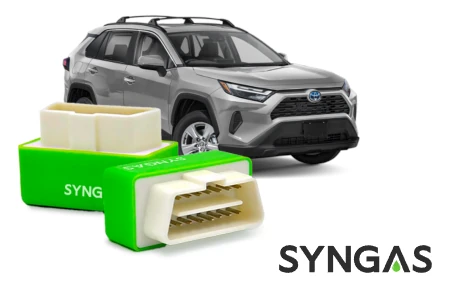
“SynGas” should not be presented as the ultimate solution for reducing fuel costs. Indeed, the savings highlighted appear largely overestimated for a simple OBD2 box, especially since no serious technical proof supports them.
Warning:
- The promise of fuel savings of up to 55% appears technically implausible for a passive module plugged into a diagnostic socket.
- The available critical feedback frequently mentions the absence of any concrete effect after receiving the product.
- The large discounts, commercial urgency and potentially fictitious testimonials on review sites weaken the credibility of the offer.
- The legal terms contain important reservations about the accuracy of the information, while the commercial communication remains very assertive.
- The legal notices lack consistency, because they do not always seem to designate the same responsible company.
– Testimonials on the Internet
The reviews highlighted display a rating of 4.7, more than 8,000 satisfied customers and 8,258 evaluations, but the general terms specify that some testimonials may use fictitious names and associated images. The reported external feedback is clearly more critical, with the majority of customers saying they do not observe any real savings and also mentioning problematic delivery times. This difference between the commercial image and the reported criticism invites treating positive reviews with great caution.
– Precautions for use
The device must be used only on a vehicle equipped with a compatible OBD2 port. Before any use, it remains preferable to check the general condition of the vehicle, the absence of engine anomalies and the real compatibility with the model concerned. An electronic box plugged into a diagnostic interface should never replace mechanical maintenance, a professional inspection or a serious search for the causes of overconsumption.
– Recommendations
This type of device is not recommended for people looking for a reliable and measurable solution to significantly reduce their fuel consumption. Real savings are more likely to come from vehicle maintenance, correct tyre pressure, eco-driving, reduced speed and, in some cases, automotive intervention supervised by a qualified professional. In case of doubt about engine behaviour, a serious diagnostic remains more relevant than an accessory sold with spectacular promises.
– Harmful effects
No major critical problem is to be reported with this automotive device. The potential risks relate more to excessive trust in a poorly documented accessory, financial loss, disappointment after purchase or a misunderstanding of the real role of the OBD2 socket. If a warning light, anomaly or unusual behaviour appears after connection, immediate removal of the module and inspection by a professional are nevertheless preferable.
The reputation of “SynGas” appears very fragile, because it is mainly based on ambitious commercial communication and very favourable internal reviews, while several technical and legal elements invite mistrust. The responsible company, Neracom LTD, is identified with an address in Hong Kong, and manufacturing and shipping from China add a significant distance between the consumer and the seller. The return conditions impose a prior procedure, possible costs borne by the customer and variable delays depending on the refund stages. The mention of testimonials that may use fictitious names also weakens the value of the displayed reviews. Finally, the real criticism reported about this type of OBD2 box and the absence of serious evidence concerning a massive reduction in consumption lead to a clearly negative assessment.
In view of the available information, “SynGas” could appeal to motorists looking for a simple solution to reduce their fuel expenses. However, the level of the promises and the lack of verifiable technical data require a degree of caution.
The promises of high savings, the absence of solid technical proof and the many negative reviews lead us to advise our readers against this product.
Alternative:
For people who want to reduce their consumption without resorting to dubious devices, simple and verifiable actions are enough:





Consumer Reviews and Testimonials