Scam Alert
Hello and welcome to Scam Or Reliable.

Scam Alert
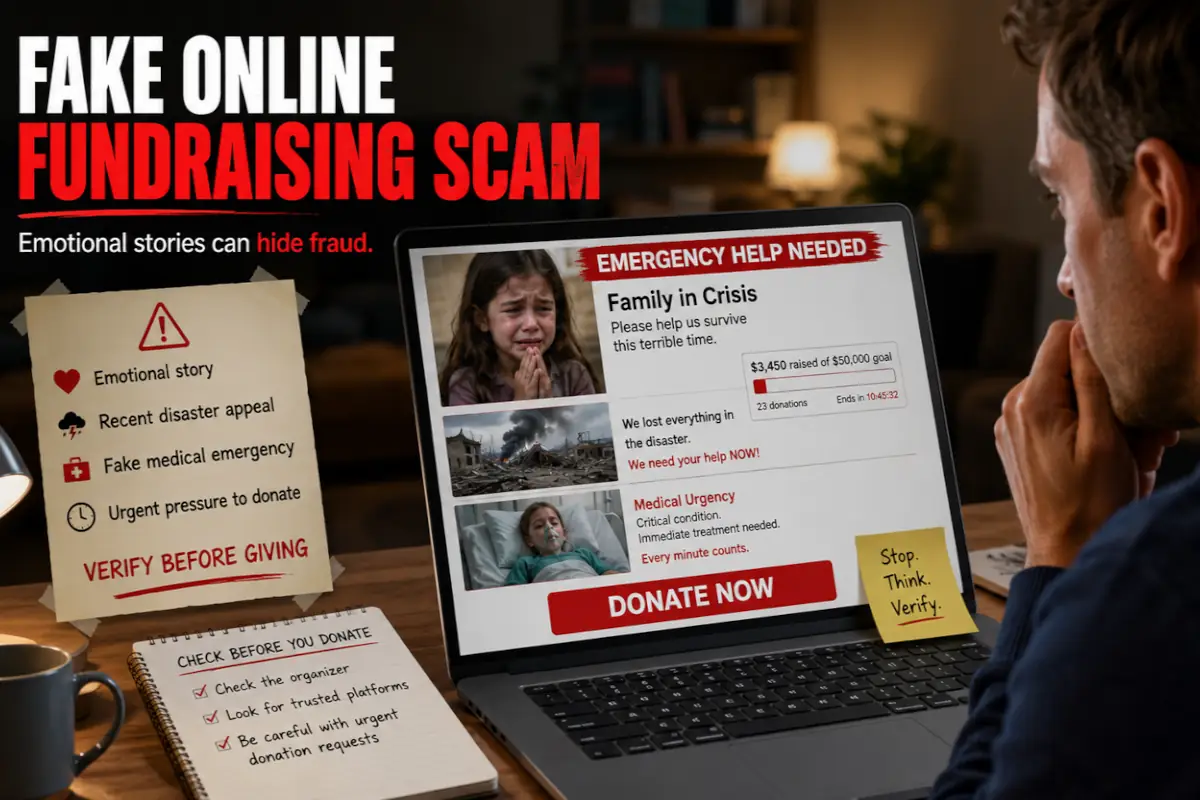
Fake fundraisers use emotional stories, recent disasters or supposed medical emergencies to obtain donations.
Stay vigilant: a few checks can often help distinguish a legitimate collection from an attempt to divert funds.
This fraud consists of creating a money collection based on an invented, diverted or falsely identified story. The sums paid are then collected by the scammer instead of being passed on to the people or organisations announced.
Fraudsters publish particularly emotional stories about a serious illness, an accident, a fire, a natural disaster or a humanitarian crisis. They may use stolen photographs, impersonate a real victim or produce artificial testimonials to make their story credible.
The fundraiser is then spread quickly by SMS, email or social media in order to trigger an immediate reaction and limit checks.
Warning signs: identity difficult to verify, highly emotional story without precise details, photographs from other sources, lack of supporting evidence, collection appearing immediately after a heavily publicised event, strong pressure to act, link received in an unsolicited message or massively posted on social media.
An emotional or widely shared fundraiser is not necessarily authentic. Before contributing, check the organiser’s identity, the origin of the images, the available supporting evidence and the checks carried out by the platform.
If in doubt, report the collection to the platform concerned as well as to the competent official service, such as Report Fraud (UK) or ReportFraud.gov (US). Our anti-fraud reporting assistant can also help you identify the appropriate steps. Inform those around you to prevent other people from sending money.
You can also consult the following resources:
👉 Check the risk level of a suspicious link
👉 The essential reflexes to avoid online scams
👉 Useful steps after becoming a victim of fraud



Consumer Reviews and Testimonials