Blog post: Online security
Hello and welcome to Scam Or Reliable!

Blog post: Online security
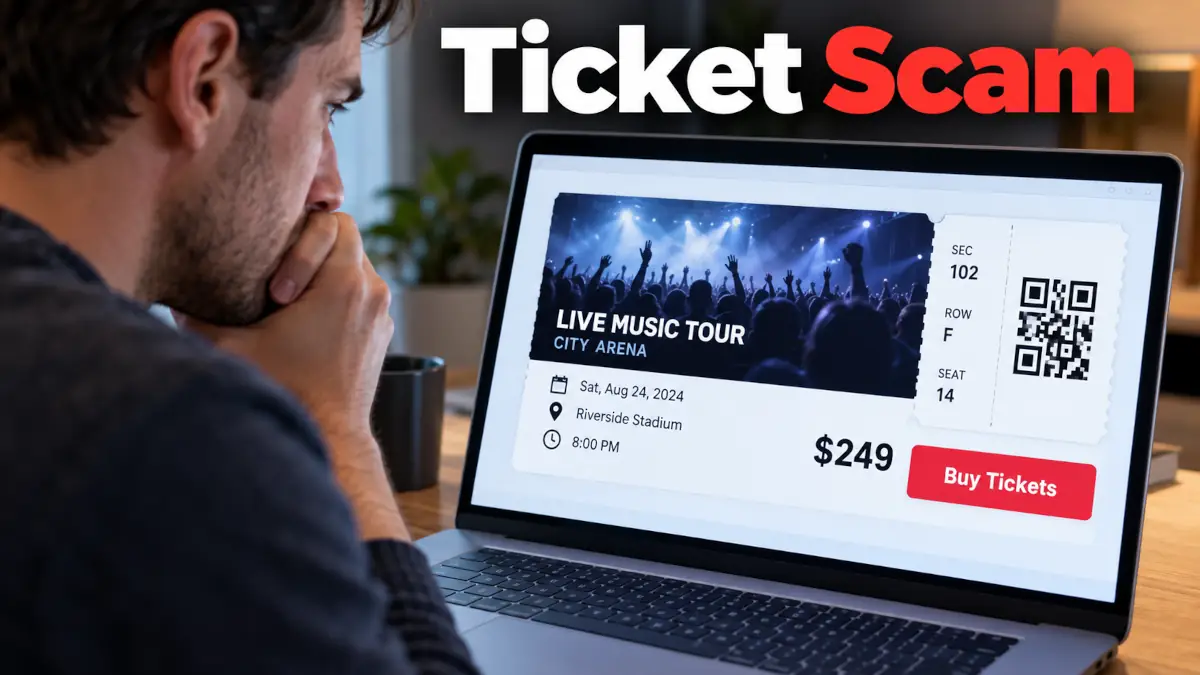 Online ticket scams exploit urgency, the popularity of an event and the difficulty of verifying a ticket before entering the venue. They take several forms: fake official websites, misleading resale listings, improvised social media profiles or genuine tickets resold several times. The trap may target a concert, a match, a festival, a family show or any other highly sought-after event. A few simple checks can nevertheless greatly reduce the risk before sending a payment or personal data.
A digital ticket circulates quickly, appears easy to copy and may seem credible when it displays a logo, barcode or QR code. For a buyer, the pressure often comes from limited time: the best seats sell quickly, the event is approaching and the seller claims that several other people are already interested. This combination creates favourable conditions for rushed decisions, especially when the transaction takes place outside an official channel.
Fraudsters do not always try to produce a poor-quality fake document. A convincing copy of a confirmation email, a well-presented screenshot or a payment page resembling a known ticketing service may be enough to reassure an Internet user in a hurry. The danger increases when the conversation leaves secure platforms and moves to private messaging, an immediate bank transfer or a direct payment app.
The loss is not limited to the price of the ticket. A victim may also lose travel expenses, book accommodation unnecessarily or only discover the fraud at the entrance check. In cases involving a fake website, banking or personal information may also be collected for other fraudulent purposes.
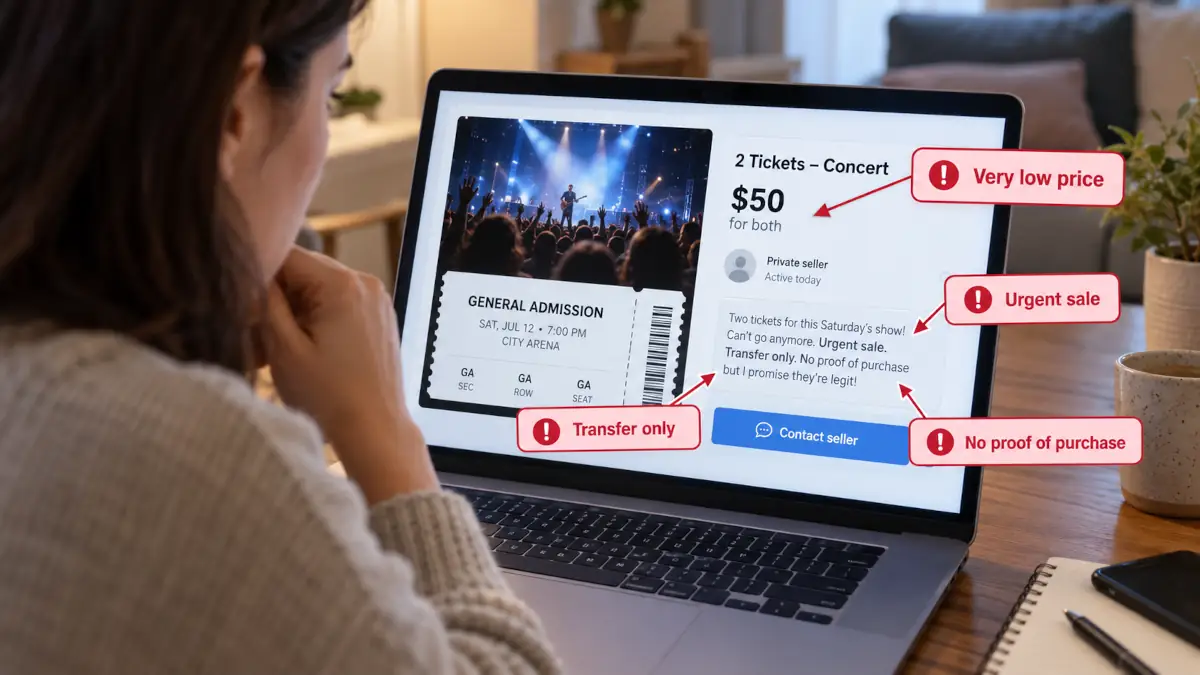 A dubious listing is not always crude. Scammers often rely on reassuring elements: the name of a well-known artist, an image of the venue, a screenshot of a ticket, a promise of quick transfer or a friendly tone. It is the inconsistencies between the urgency, price, sales channel and requested payment method that should encourage further checking.
A very low price for a sold-out event deserves as much caution as an excessive price on an unofficial resale marketplace. In the first case, the offer is used to trigger a quick payment; in the second, the buyer may pay a high price for a counterfeit or unusable ticket. A pushy seller who refuses any reasonable verification adds another warning sign.
The fake official website is one of the most effective traps because it exploits a normal reflex: quickly searching for a ticket through a search engine. A sponsored advert or prominently placed result may lead to a page copying the identity of a ticketing service or organiser. The user thinks they are buying from the right place, while actually sending their payment through a fraudulent interface.
Resale between individuals creates another difficulty: even a ticket that appears genuine may already have been sold to several people. A unique barcode or QR code guarantees nothing if the seller keeps a copy and sends it to multiple buyers. At the entrance, the first person to present the ticket may be accepted, while the others are refused entry.
Social media also plays an important role in these scams. A profile may post in the comments of an event page, reply to people looking for tickets or join fan groups to gain credibility. The story often remains simple: the seller can no longer attend, wants to resell quickly, but demands immediate payment before sending the file.
Another method involves overcharging for a counterfeit or unusable ticket by exploiting scarcity. The seller may promise a well-positioned seat, refer to an earlier purchase or provide a partial image of the ticket. Without access to an official transfer system, the buyer then becomes dependent on the seller’s word.
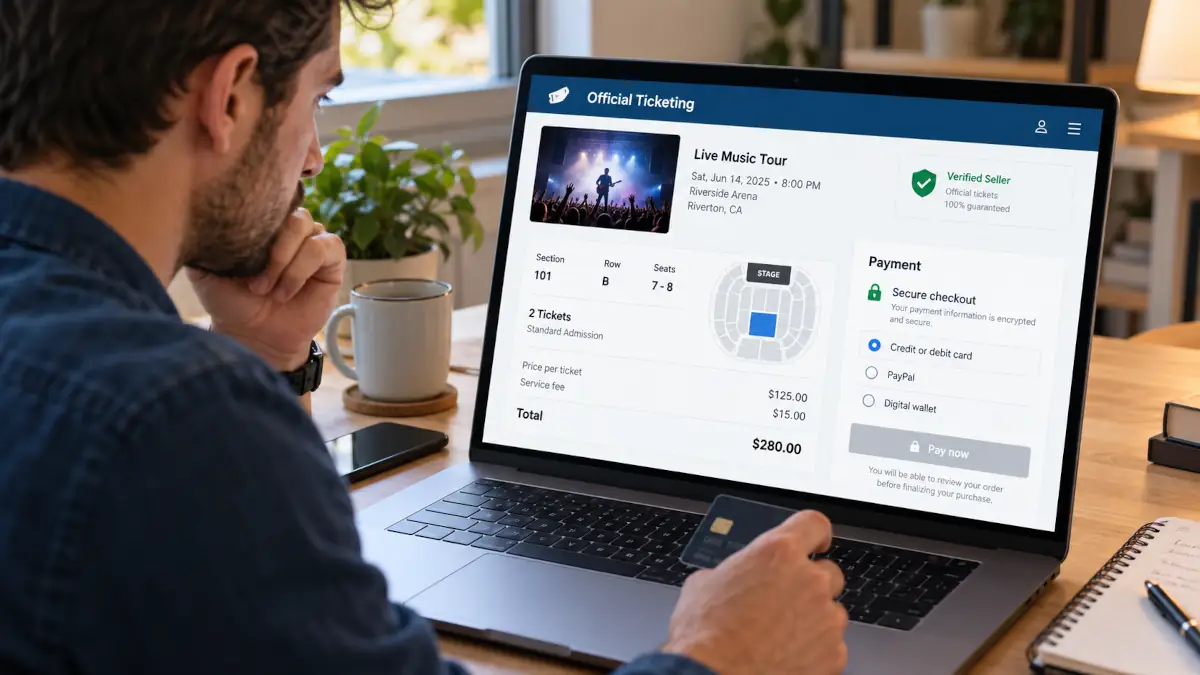 The best reflex is to return to the source rather than follow a random link. The organiser’s website, the venue’s website, the artist’s official page or an authorised ticket distributor generally provide the most reliable information about approved sales channels. Typing the address into the browser yourself reduces the risk of landing on a phishing copy.
The same caution should apply when the event is close. Scammers rely precisely on the idea that you must buy quickly before the opportunity disappears. A few minutes of verification are better than sending a payment to a stranger with no easy way to dispute it.
An honest seller may have a legitimate reason for reselling their ticket, but they should not refuse every reasonable verification. A recently created account with no coherent activity, a generic photo or very vague answers requires increased caution. Pushing the buyer to pay immediately without using a secure resale solution remains an unfavourable indicator.
An in-person handover may reduce some risks when possible, but it does not solve everything for digital tickets. A printed ticket or one displayed on a phone may be a copy already sent to someone else. The ideal option remains an official transfer through the system provided by the organiser or a recognised platform for that event.
Before paying, it is useful to compare the listing information with what is available through official channels. Event name, date, venue, seat category and admission conditions should be consistent. If the seller refuses to hide only the sensitive elements while providing verifiable information, or invents excuses to avoid any questions, it is better to end the exchange.
A link sent through a private message also deserves a separate check. A payment page may reproduce familiar logos without belonging to the service it claims to represent. If you have doubts about an address, do not enter your information and check the link with an appropriate tool before continuing.
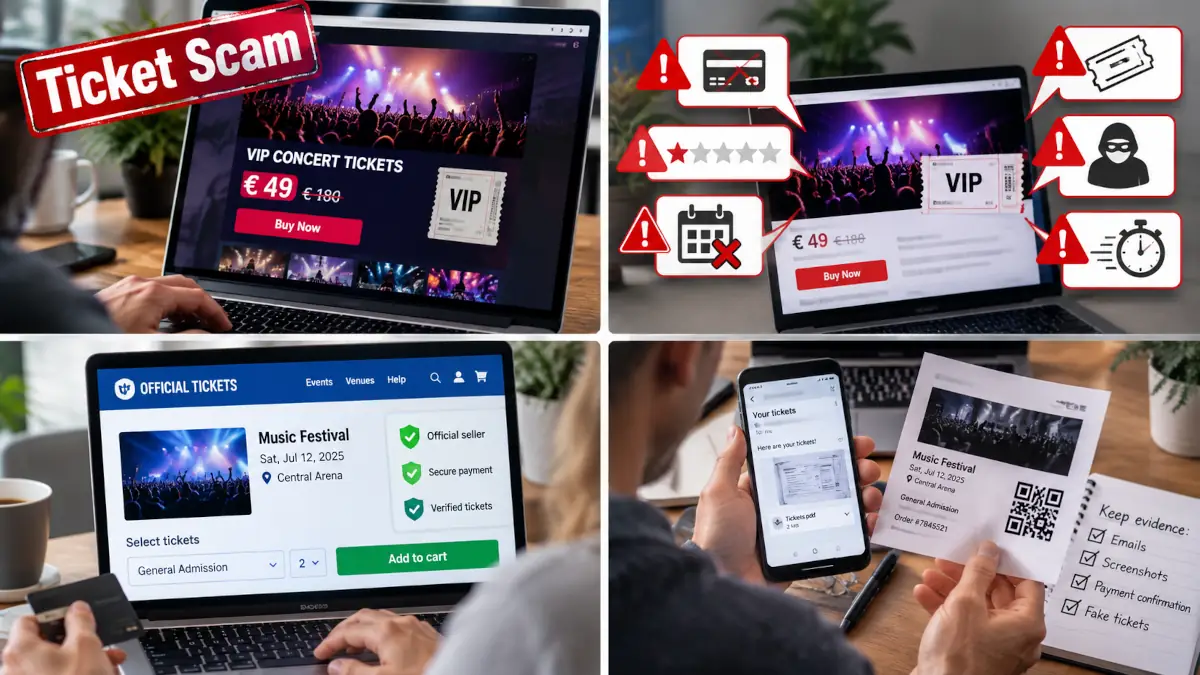 Discovering the fraud before or during the event often causes confusion, but the first actions matter. Preserve the evidence instead of deleting the conversation out of anger or embarrassment. Screenshots, emails, payment confirmations, website addresses, profiles used and transaction references can help document what happened.
If the payment was made by card, contacting the bank quickly allows you to explain the situation and ask what dispute options are available. The outcome depends on the payment method, the context and the provider’s applicable rules, so an automatic refund should not be expected. The immediate objective is to report the fraud and limit any possible further charges.
In the UK, fraud can be reported through Report Fraud, while suspicious websites can also be submitted to the National Cyber Security Centre. In the US, scams can be reported to the Federal Trade Commission through ReportFraud.gov. Depending on the situation, reporting the listing to the platform hosting it may also help remove the profile or advert. The important point is not to limit yourself to warning people you know: structured evidence is more useful than a simple warning message posted in the heat of the moment.
When fraud is identified, warning other Internet users can prevent further victims, but the wording should remain factual. It is better to describe the elements observed, such as a dubious URL, a profile used or a risky payment request, rather than circulate imprecise accusations. Platforms often provide built-in reporting mechanisms where screenshots or explanations can be added.
Caution is also necessary with tickets received after a suspicious transaction. Publishing them in full to ask for an opinion can expose the barcode or QR code and create a new problem. If public verification is necessary, sensitive information should be hidden before sharing.
Organisers or venues may sometimes indicate whether a resale channel is recognised for the event, without necessarily being able to authenticate every document exchanged between individuals. This distinction matters: a logo or screenshot does not replace an official transfer. The more the purchase remains within a controlled environment, the less the buyer depends on evidence that can easily be copied.
Online ticketing scams thrive on three factors: scarcity of tickets, urgency to decide and trust placed too quickly in a page or profile. Before paying, it is better to return to official channels, check the website address, refuse unsecured payments and favour regulated resale. If fraud has already occurred, keeping evidence, contacting the bank, filing a report and reporting the listing are the most useful steps.
To strengthen your reflexes, you can consult our guide on the right reflexes to adopt before paying online. If you are unsure about a ticketing website or payment page, our suspicious link assessment tool can help you take a step back. If you have already been scammed, the support path for victims can help structure the first actions to take.