Blog post: Online security
Hello and welcome to Scam Or Reliable!

Blog post: Online security
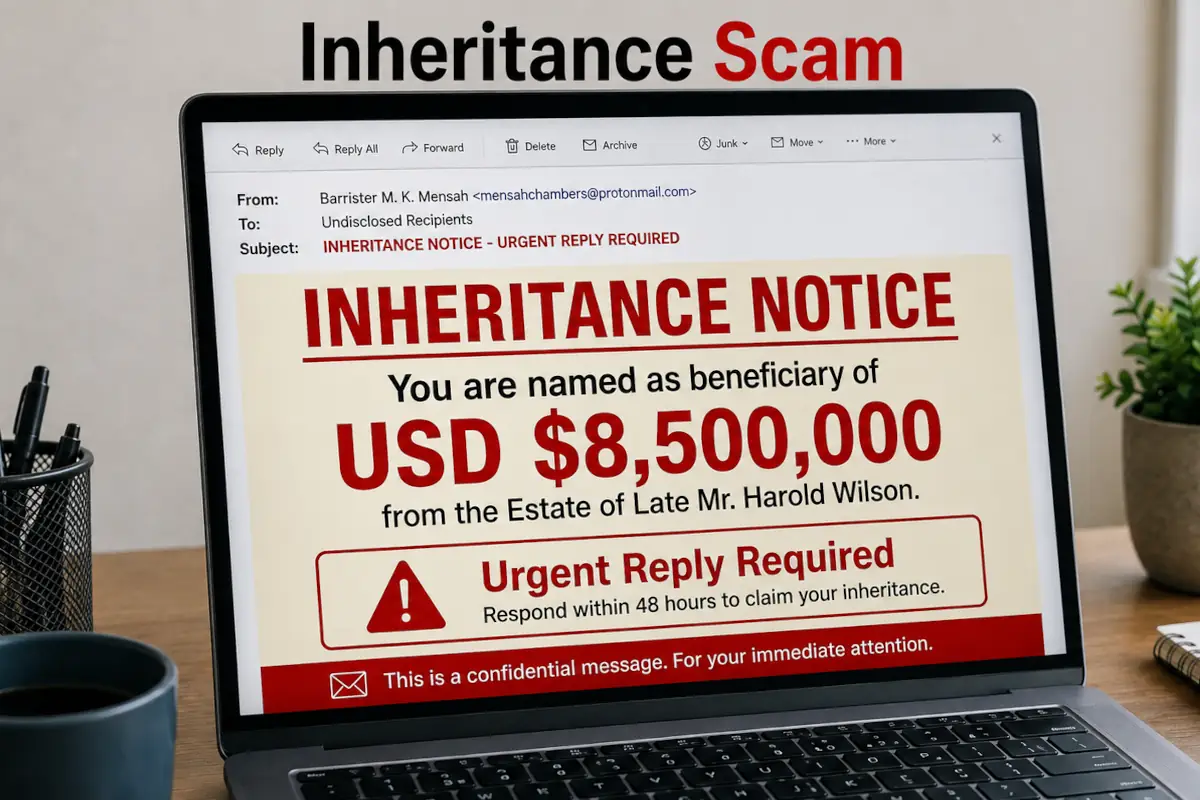 Scams linked to inheritances or international estates often begin with an unexpected announcement: a stranger, distant relative or foreign professional supposedly names you as the beneficiary of a large sum.
The promise is intriguing, sometimes appears official and suggests that a simple formality would allow you to recover the money. In reality, the trap mainly aims to obtain repeated payments or sensitive personal information.
Knowing how to recognise the mechanisms of this fraud helps you cut it short before the situation worsens.
The inheritance scam relies on a simple idea: no one expects to receive a message announcing an estate from abroad. This surprise often creates a mixture of curiosity, doubt and hope, giving fraudsters an opportunity to continue the exchange. The message may arrive by email, by post or through any other channel allowing discreet first contact.
The scenario usually mentions a deceased person, a blocked account, an unclaimed estate or a family link presented as possible. Fraudsters do not always try to be perfectly credible from the start; instead, they rely on the desire to know more. A reply, even a cautious one, is enough for them to begin a more insistent conversation.
The common point remains the promise of a large gain, available on condition that certain steps are completed. These steps are invented or distorted to push the victim into paying fees that have no real justification. The further the discussion goes, the more precise and pressing the requests become.
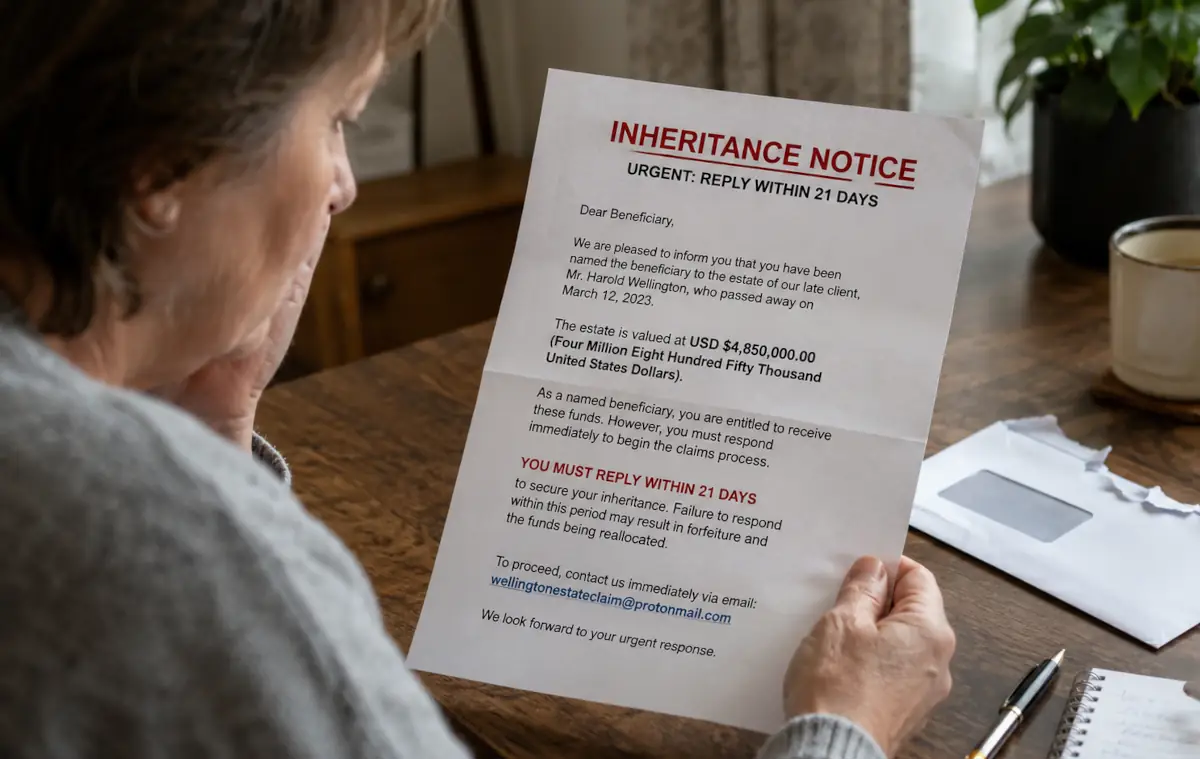 To give weight to their story, scammers often present themselves as a notary, lawyer, banker or intermediary in charge of the estate. The tone used may seem administrative, with solemn wording, file references and attachments that imitate official documents. This appearance is sometimes enough to reassure someone unfamiliar with the practices of a foreign country.
Fake supporting documents mainly serve to reduce suspicion. They may contain names, stamps, signatures or legal wording designed to impress. Their presence proves nothing: a document sent by a stranger must always be checked through an independent source before any action is taken.
The supposed professional also controls the pace of the exchange. They answer questions, insist on confidentiality and present each step as essential. The victim then finds themselves in an asymmetric relationship, where the other person seems to master the rules while actually inventing them as they go along.
The first payment request is often presented as a formality: administration fees, tax, certificate, legalisation, translation or release of funds. The amount may seem modest compared with the inheritance announced, which makes the trap more acceptable. Once the first payment has been made, other obstacles appear and lead to further requests.
This mechanism works because the victim has already invested time, sometimes money, and hopes to recover the promised sum. Fraudsters then exploit the idea that it would be a shame to give up at this stage. Each additional payment is presented as the last one, without ever leading to the announced transfer.
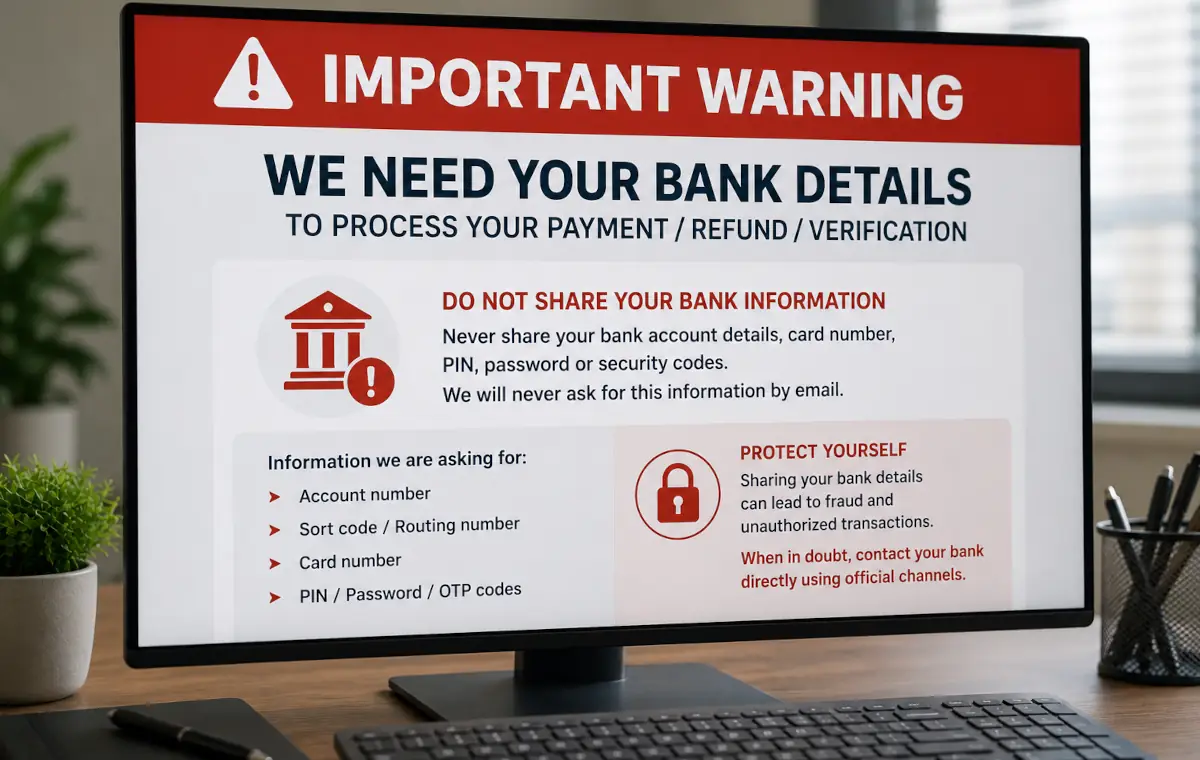
The danger is not limited to bank transfers. Scammers may also ask for copies of identity documents, bank details, a signature or family information. This data can then be used to apply further pressure or attempt new frauds.
 An inheritance announced by a stranger requires immediate caution, even if the message seems well written. The foreign origin, the lack of any clear relationship with the deceased and the promise of a large sum already form a suspicious combination. Fraudsters use these elements because they make checks more difficult for the victim.
Time pressure is another sign. An honest contact will generally accept that you seek advice, check their claims and refuse to send sensitive data. Conversely, the scammer tries to limit your distance by mentioning a deadline, a risk of loss or the need for a quick response.
Inconsistencies should also be taken seriously. A strange email address, unusual mistakes, an institution name that cannot be verified or explanations that change can reveal a setup. Even when the message appears polished, the demand for payment in advance remains one of the most important markers.
Replying to a suspicious message may be enough to confirm that your address is active. If the content mentions an unexpected estate, the safest approach is not to enter into a negotiation and not to provide any information. Serious verification must be done through another channel, with a professional you contact yourself.
Consulting a solicitor, probate professional or competent authority can help put the message in perspective. The goal is not to discuss with the sender in order to convince them, but to obtain an independent opinion. A fraudster may seem patient and courteous, but their aim remains to lead you gradually towards a payment or the transmission of information.
Attachments and links contained in the message must also be handled with caution. They may serve to strengthen the setup or direct you towards fake forms. If you have doubts, keep the message without clicking further and seek advice before taking any action.
 If you have replied, sent a document or made a payment, it is best to stop the exchanges immediately. Fraudsters may try to keep you engaged by promising a refund, speeding up the file or offering a last-minute solution. Continuing the discussion increases the risk of new requests.
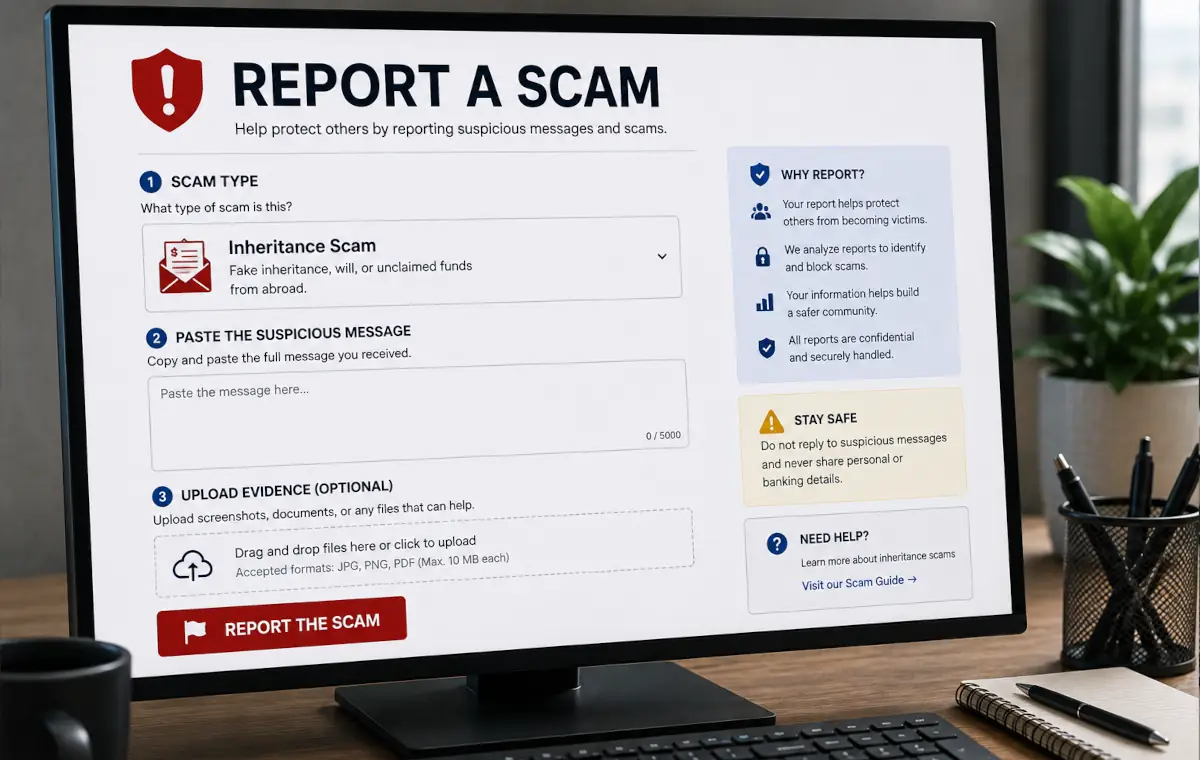
Gather the available elements: messages, contact details used, documents received, proof of payment and any screenshots. This information can help understand how the scam unfolded and report the facts more precisely. Do not modify the original messages and avoid deleting the exchanges too quickly.
Warn your bank quickly if financial information has been transmitted or if a transfer has been made. Depending on the situation, it can tell you which steps are appropriate for your case. You can also contact the reporting services available in your country; in the UK, services such as the National Cyber Security Centre (UK) or Report Fraud / Action Fraud (UK) can guide victims and receive certain reports depending on the nature of the facts, while in the US, ReportFraud.gov (US) or IdentityTheft.gov (US) may be appropriate depending on whether fraud or identity theft is involved.
The effectiveness of this fraud lies in its balance between dream and credibility. An unexpected inheritance seems unlikely, but not impossible in the minds of many victims, especially if the story mentions a family name or a vague family history. Scammers exploit this area of uncertainty to prolong the exchange.
Geographical distance strengthens the trap. When a file is presented as international, it becomes more difficult to verify practices, contact details and documents. Victims may then accept explanations they would have rejected in a more familiar setting.
The succession of small steps also contributes to the hold. Instead of immediately demanding a large sum, fraudsters create a progression: identity confirmation, file to complete, fees to pay, new document to provide. This method gives the impression of an ongoing procedure, while it only serves to multiply opportunities for payment or data collection.
An inheritance proposal from abroad, especially when it comes from a stranger and demands payment in advance, must be treated as a warning sign. Before replying, take the time to compare the situation with the cautious reflexes to adopt against scams and, if you have already shared information, use a support path to take stock after fraud. To assess a dubious proposal before going further, a tool such as the analysis of a suspicious offer can also help spot inconsistencies and avoid a rushed decision.