Blog post: Online security
Hello and welcome to Scam Or Reliable!

Blog post: Online security
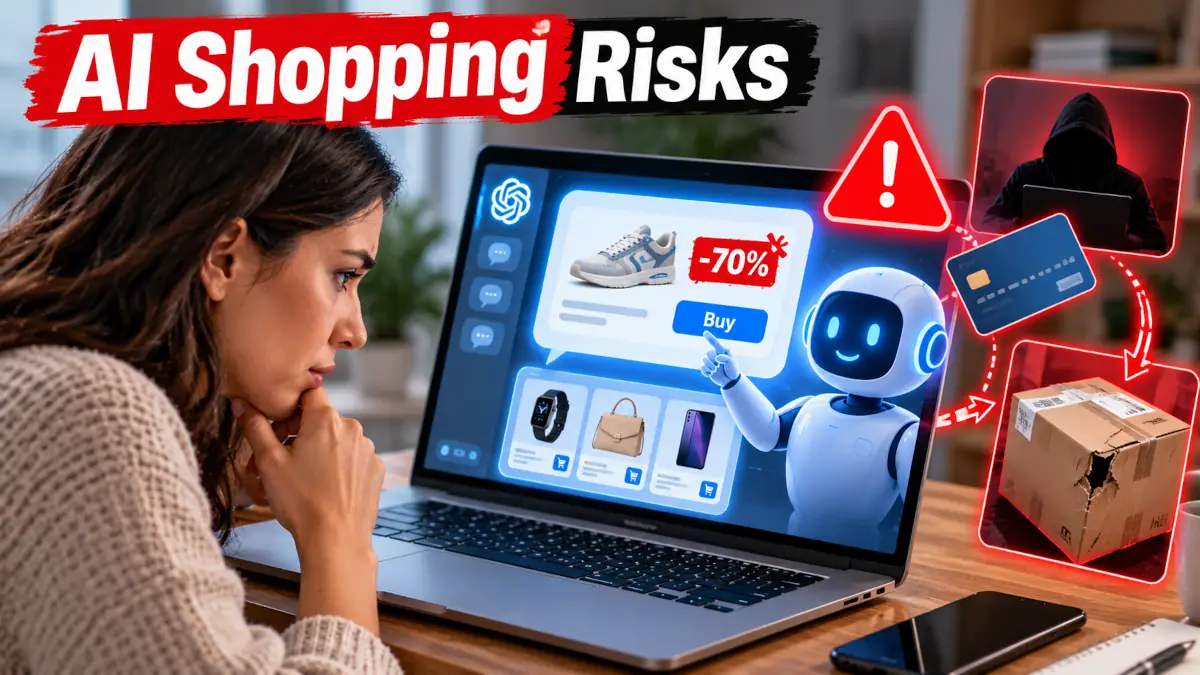 Artificial intelligence no longer simply answers questions before a purchase. It can compare products, identify promotions, suggest negotiation strategies and, in some shopping journeys, even facilitate payment without leaving the conversation. This development makes online shopping faster, but it also transfers some control to systems whose decision-making criteria are not always visible. For consumers, the promised convenience must therefore come with new verification habits.
Assistants such as ChatGPT, Microsoft Copilot and certain tools integrated by online retailers are now involved at several stages of the customer journey. Their most obvious advantage lies in natural language interaction: users describe a need, a constraint or a particular situation, and the tool suggests suitable options. This approach changes how people search, replacing a series of keywords with a more flexible conversation.
Whether shopping for a gift, household equipment or a second-hand product, AI can summarise technical specifications, condense customer reviews and produce an easy-to-read comparison. In some cases, such as with a ChatGPT extension connected to Leboncoin, the tool can also help estimate a fair price and prepare a negotiation. During discount periods, particularly Black Friday or seasonal sales, nearly one in two shoppers now uses AI as their main tool for tracking the best deals in real time.
The most significant shift occurs when AI is no longer simply consulted but is authorised to participate in the transaction. Partnerships with platforms such as Shopify already demonstrate this direction, allowing users to purchase directly from a conversational interface. The distinction between advice, commercial recommendations and the act of making a payment then becomes less clear.
 The speed of these tools is not enough to eliminate consumer concerns. Voice-activated purchasing and agents capable of making payments on behalf of users understandably generate distrust. Only 22% of people say they are willing to take this step, while physical debit cards, held by 97% of the population, remain a firmly established means of maintaining control.
Payment security accounts for a large proportion of these concerns. If an autonomous agent connected to a bank card or payment service were compromised through a breach of the platform or the agent itself, it could become an entry point for fraudulent purchases. Even without a cyberattack, the feeling of losing control over the final confirmation click can discourage adoption.
The reliability of recommendations presents another challenge. A conversational AI may present a particular brand as the best option without users clearly understanding whether this choice is based on objective criteria, a commercial partnership or ranking bias. Unlike some search engines that explicitly label advertisements, the recommendation may blend seamlessly into a fluent response and appear impartial.
The fraud risk goes beyond fake websites or diverted payments. AI that knows your preferences, budget and sometimes even your doubts can subtly influence your decisions. The danger then lies less in an obvious lie than in gradually steering consumers towards choices that do not necessarily serve their interests.
Undisclosed sponsored recommendations illustrate this problem particularly well. If a brand is naturally incorporated into an answer, users may believe they are receiving impartial advice when the recommendation is actually a favoured commercial placement. The distinction becomes even harder to recognise when the response compares several options while consistently emphasising just one.
Personalised pricing adds another layer of complexity. By analysing conversation history, urgency, estimated purchasing power or emotional signals, a system can contribute to offering different terms to two users searching for the same product. This highly personalised dynamic pricing makes conventional price comparisons less straightforward.
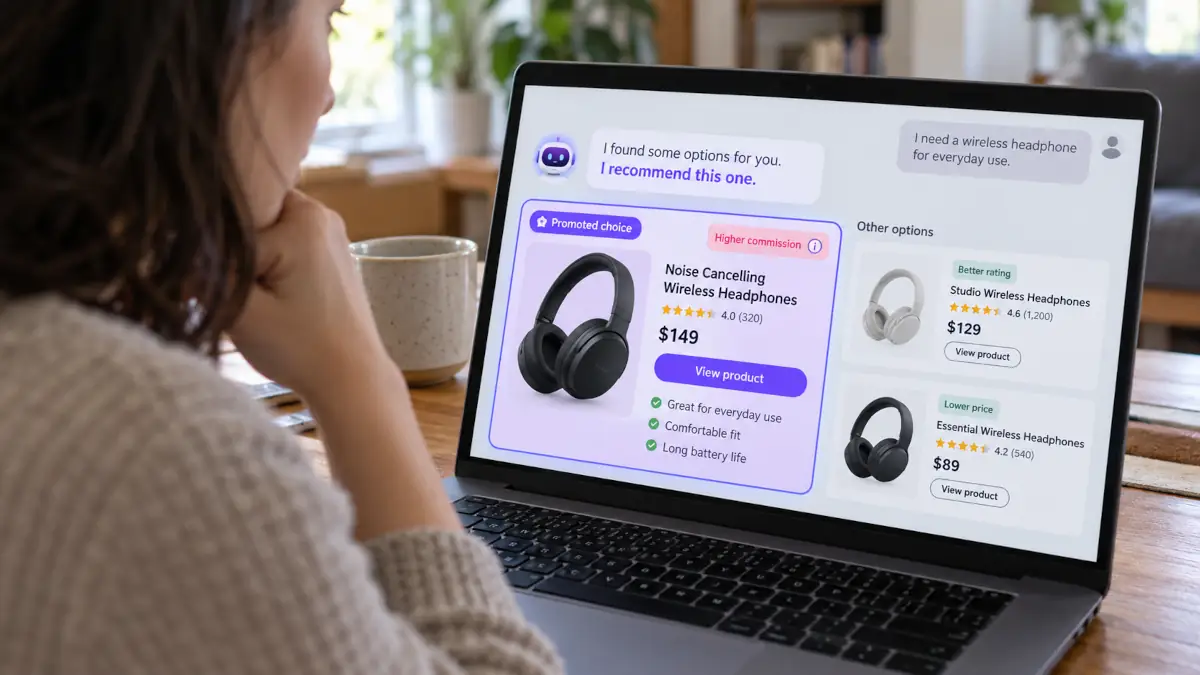
Being trapped in a commercial filter bubble can also reduce the quality of purchasing decisions. By continually profiling users’ preferences, AI risks hiding alternatives that are cheaper or better suited to their needs. Consumers gain immediate convenience but may lose access to a wider range of information.
To make accurate recommendations, AI often asks for details that people would not spontaneously share with a salesperson. A health-related requirement, a child’s age, the layout of a home or an exact budget may be disclosed during a seemingly harmless conversation. This information becomes valuable if it is sold to data brokers or exposed in a data breach.
The most tangible risk involves targeted phishing. The more a fraudster knows about a victim’s personal circumstances, the more convincing their message can become: a recently researched product, a problem previously mentioned, a planned expense, a family constraint or a financial emergency. The scam then no longer resembles a generic message but a perfectly tailored follow-up.
The practical rule is to avoid unnecessary personal details. AI does not need to know intimate circumstances to recommend a type of product, a price range or technical specifications. The more factual the request, the smaller the potential exposure.
Generative AI models can produce convincing answers even when they are wrong. In online shopping, this weakness may take the form of invented technical specifications, a misrepresented warranty or an incorrectly stated return policy. A garment described as 100% cotton when it is not, or a refund presented as guaranteed without checking with the seller, can be enough to create an unpleasant surprise after delivery.
Removing friction from the purchasing process makes this problem worse. One-click payments or instant voice orders eliminate the pause during which buyers normally review their choices, compare alternatives and sometimes decide against a purchase. A tool that makes buying too effortless can encourage impulsive spending, particularly when a recommendation arrives at the exact moment the user is hesitating.
Overreliance on machine-generated decisions also deserves attention. By delegating the choice, consumers may read fewer reviews, verify fewer sources and lose the habit of comparing different pieces of information. If the product received is dangerous, unsuitable or simply different from what was expected, understanding who is responsible becomes more difficult for the customer.

The objective is not to reject all automated assistance but to restore a clear role for human decision-making. AI can organise information quickly, but it should not become the sole authority on prices, seller reliability and payments. Staying safe requires a clear distinction between research, comparison and financial authorisation.
Double-checking remains the most effective precaution. Before clicking, make sure the product really exists at the advertised price, that the stated availability matches the retailer’s website and that the reviews come from genuine customers. A traditional price comparison service or private browsing can also help identify prices inflated through profiling.
Voice purchases or fully automated shopping should remain disabled when they are not needed. Every payment deserves an explicit, visible and deliberate confirmation step. This requirement may seem less convenient, but it reduces errors, duplicate orders and purchases triggered too quickly.
Doubts arising after a purchase should not be ignored. A price different from the one advertised, an unfamiliar seller, an inconsistent description or unusual pressure during the conversation are warning signs that deserve serious attention. It is better to suspend any further automatic transactions while establishing what happened.
Digital evidence can help reconstruct the situation. The AI conversation, product page, receipt, return conditions and seller messages provide concrete information for assessing the gap between what was promised and what actually happened. Preserving these records is particularly useful when the initial recommendation influenced the purchasing decision.
If a payment appears unauthorised or fraudulent, the first step is to regain control of the payment methods connected to the tool. You should also review the permissions granted to connected extensions, applications or agents. If you receive a suspicious message after searching for or purchasing a product, analysing its content can often help identify a phishing attempt constructed using personal information.
AI agents can make online shopping more seamless, but this convenience should not eliminate the precautions that protect consumers. The right balance is to use AI to organise information, then personally verify the seller, price, terms and payment before confirming any transaction. To strengthen these habits, you can consult our practical advice on spotting scams before paying, assess a questionable offer with a tool for analysing suspicious listings or quotations, and explore the appropriate responses in our comprehensive guide to fraud and essential precautions.