Posted by René Ronse
Alert : PayPal Scams – Traps to Know Before Making a Payment
Updated on 8 October 2026.
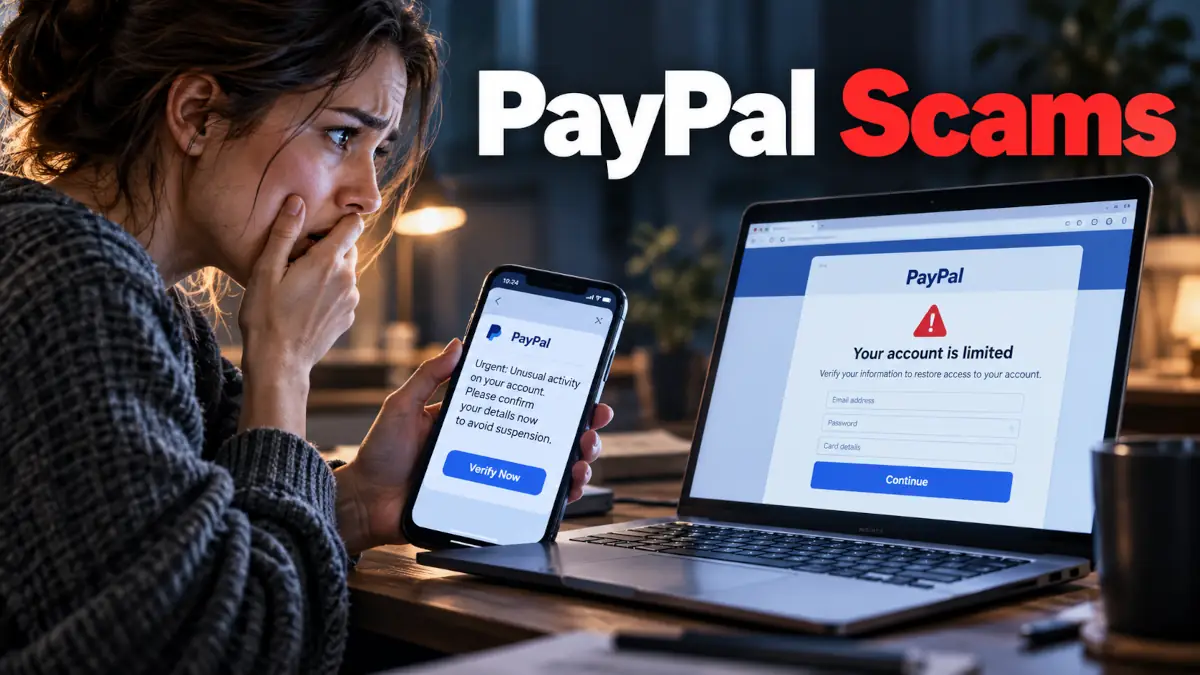 The PayPal name is used as bait in many scams: fake messages, misleading money requests, payments announced but never received, or invented fees supposedly required to release a transaction.
Stay vigilant: a few simple checks can often reveal the trap before you send money, a parcel or sensitive information.
PayPal scams
Fraudsters rely on the trust associated with PayPal to push their victims into acting quickly. The trap can target both buyers and sellers, particularly in transactions between individuals.
The method used
The most widespread method remains phishing: an email, SMS or notification imitates PayPal and announces an account restriction, suspicious activity or an unauthorised payment. Some messages may even come through genuine PayPal features, such as an invoice or money request, but include a fake expensive purchase and a fraudulent phone number to contact. Other scenarios rely on a fabricated payment confirmation, fees to pay in advance, a request to use Friends & Family, or a manipulated refund.
Warning signs: link to open from a message, support number provided in an email or SMS, unknown purchase presented as urgent, payment supposedly blocked, request to pay using Friends & Family, payment confirmation missing from the PayPal account, fees requested before receiving the money.
A few tips:
- 🔗 Do not open PayPal through a link received by email, SMS or notification: use the app or type paypal.com into your browser yourself.
- 📞 Do not call a number shown in a suspicious message, even if the message appears official: use only the contact options provided in the PayPal app or on the PayPal website.
- 👀 Before sending an item or responding to a request, log in to your account to check that the transaction actually exists.
- 📦 For a sale between individuals, prefer Goods & Services payments and refuse Friends & Family when it is requested by a stranger.
- ⏳ Do not send anything until the money appears as genuinely available in your PayPal account.
- 💸 Refuse any advance fee supposedly required to release a payment: this mechanism is a major warning sign.
- 🔐 Enable two-factor authentication and regularly review your account activity to spot any anomaly quickly.
Conclusion
A message displaying the PayPal logo is not enough to prove that it is reliable. If in doubt, do not click, do not call back the number provided and check your account directly through the official access point.
You can report this type of attempt through an official platform or use our anti-fraud reporting assistant, then warn those around you to help limit the number of victims.
To go further, these resources can help you check a message or link, or react after fraud:
Written by : René Ronse
Sources & Methodology : This alert is based on regular monitoring of national reporting platforms, feedback from victims, statements issued by the relevant authorities and other information available at the time of writing or the latest update. Its purpose is to identify the method used, the warning signs and the appropriate steps to take when faced with this type of fraud.
About the author : René Ronse, manager of ArnaqueOuFiable.com. Expert in consumer cybersecurity, specialist in detecting online fraud, product transparency, and digital compliance. He has over 20 years of experience analyzing hidden subscription mechanisms, unreadable terms and conditions, aggressive sales tactics, and deceptive commercial practices on the web.
Last updated : 8 October 2026.
This article is also available in : Français - Deutsch - Español - Italiano - Nederlands - Português




Consumer Reviews and Testimonials