Posted by René Ronse
Alert : Trading Platform Scam – Fake Media, Deepfakes and Misused Celebrities
Updated on 28 August 2026.
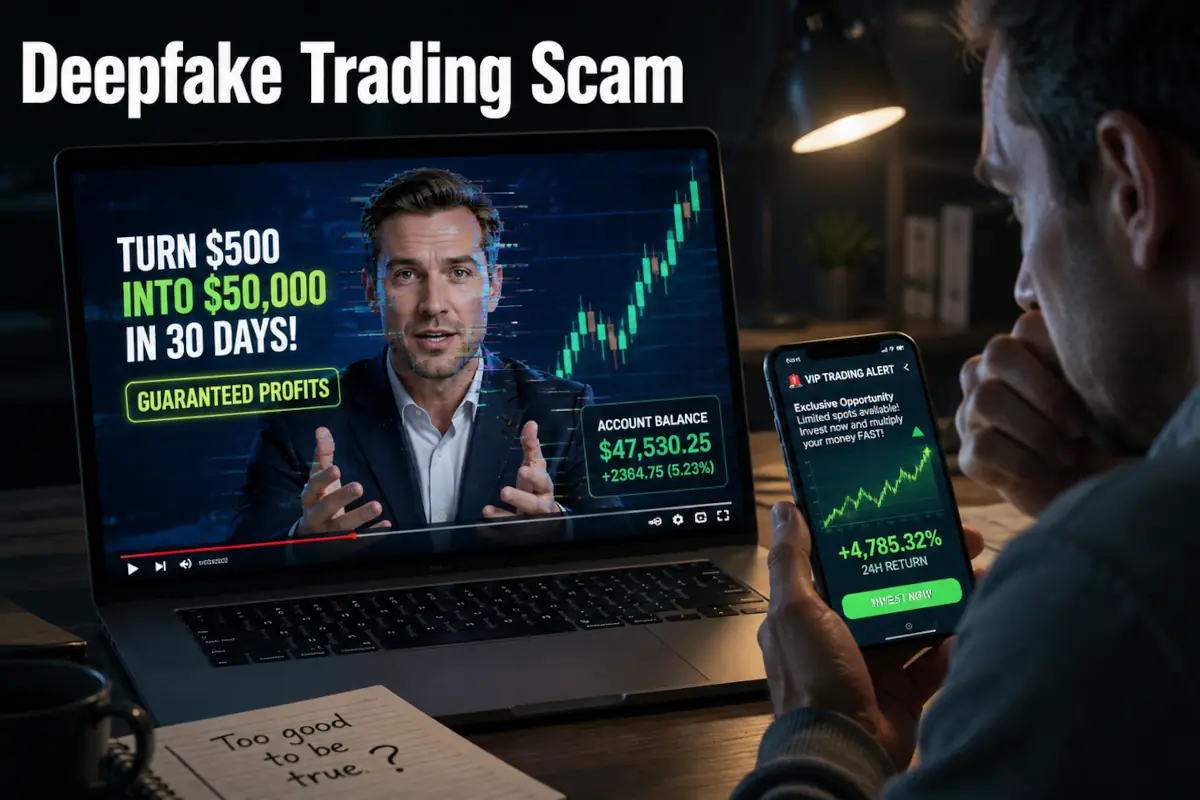 Misleading adverts use the image of well-known media outlets and public figures to draw Internet users towards fake investment platforms. The trap often starts with a spectacular video or article, then ends with requests for increasingly large deposits.
Stay vigilant: a few clues can help recognise this manipulation before you entrust your money or contact details.
Trading scam using fake media and deepfakes
This fraud relies on a highly credible setup: a celebrity appears to recommend an investment, a news website seems to confirm the information, then a platform promises fast gains through automated trading. The losses can be very heavy, because victims are pushed to invest far beyond the first payment.
The method used
Fraudsters distribute ads on social media or through advertising spaces bought on legitimate websites, with deliberately sensational headlines. The click leads to an imitation of a well-known media outlet, such as a major news site, where an invented story promotes a cryptocurrency or stock trading algorithm. After registration, a fake financial adviser calls, displays fake profits on an app and insists on obtaining new payments.
Warning signs: celebrity video that is too convincing or sensationalist, article imitating a recognised media outlet, promise of fast gains with a small initial deposit, adviser who calls back after a simple form, dashboard showing unrealistic profits, pressure to invest more, request for credit or supposed tax to pay in order to recover the money.
A few tips:
- 🔎 Always check the address of the site visited: a media copy can reproduce the appearance of a known newspaper without being its real website.
- 🎭 Do not trust a video of a public figure recommending an investment: deepfakes can give the impression of seeing and hearing a real statement.
- 💰 Be wary of returns presented as fast, high and risk-free: an investment that seems too advantageous should immediately raise doubt.
- 📋 Check the warning list or register of the financial authority in your country, such as the FCA Warning List and Financial Services Register in the UK, or Investor.gov, the SEC, the CFTC RED List and FINRA BrokerCheck in the US, depending on the type of investment, before any registration.
- 📵 Cut the exchange short if a supposed adviser contacts you on WhatsApp, Telegram, by phone or after a form filled in on an advertising page.
- 🧾 Do not pay additional fees to unblock a withdrawal: an exit tax demanded by the platform may be a second stage of the scam.
- 🛑 Refuse any pressure to invest your savings or take out credit for an opportunity presented as urgent.
- 🔗 Before clicking or paying, have the advert, website address or offer analysed if doubt persists.
Conclusion
An advert that combines celebrity, well-known media outlet and promise of fast gains must be treated with great caution. If you have already shared your contact details, do not continue the exchange, do not add more money and keep useful elements such as the website address, screenshots and messages received.
Reporting this type of fraud on an official or national platform helps limit its spread; you can also use our anti-fraud reporting assistant and warn those close to you to prevent other victims.
To go further, these internal resources can help you verify, react or train yourself to spot traps:
Written by : René Ronse
Sources & Methodology : This alert is based on regular monitoring of national reporting platforms, feedback from victims, statements issued by the relevant authorities and other information available at the time of writing or the latest update. Its purpose is to identify the method used, the warning signs and the appropriate steps to take when faced with this type of fraud.
About the author : René Ronse, manager of ArnaqueOuFiable.com. Expert in consumer cybersecurity, specialist in detecting online fraud, product transparency, and digital compliance. He has over 20 years of experience analyzing hidden subscription mechanisms, unreadable terms and conditions, aggressive sales tactics, and deceptive commercial practices on the web.
Last updated : 28 August 2026.
This article is also available in : Français - Deutsch - Español - Italiano - Nederlands - Português




Consumer Reviews and Testimonials