Blog post: Online security
Hello and welcome to Scam Or Reliable!

Blog post: Online security

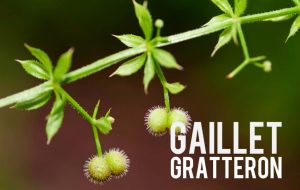
An annual plant that can be found just about anywhere along roadsides, Gaillet-Gratteron is easily recognized by its square stems and lanceolate, whorled leaves. It’s best recognized by the fact that its stems, leaves and seeds stick everywhere, on clothes, pets’ fur, etc.
The fruits of this plant are round and green in color.
What are the virtues of this plant?
Can it help you lose weight?
Our survey will answer all your questions about cleavers.
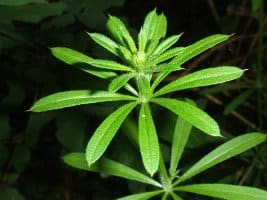
Scientific name: Galium aparine
Common names: rièble, grateron, gratte-langue, gaille, gratte-cul, caille-lait
Botanical classification: Rubiaceae family
Usual forms and preparations: infusion, mother tincture, soup
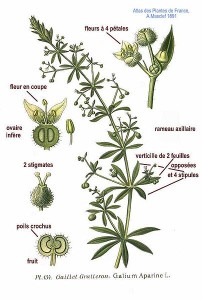
Cleavers, whose scientific name is Galium aparine, is a member of the Rubiaceae family, which includes over 7,000 species in 500 genera.
Galium aparine grows in woods, hedgerows, crops, wasteland, forest margins and, in general, all clay soils up to an altitude of 1000m.
This plant, which flowers between May and October, has a quadrangular stem, 30 cm to 1 m long, and is either creeping or climbing. The stem is trimmed at the corners with small, curved prickles that cling everywhere.
The 6 to 9 cm leaves, also covered on the underside with prickles, cling as well. On your nature walks, you’ve probably already come under attack from this plant!
Cleavers produces whitish flowers for several months, from May to October, followed by large, brown, globular fruits measuring between 4 and 7 mm, hanging in pairs and bristling with hooked hairs.
The plant is also often referred to as “curdling milk”, as certain varieties are said to curdle milk.
This plant is very common throughout France, except in the Mediterranean region. It is harvested between May and June, preferably before flowering.
Cleavers is used in phytotherapy for the active ingredients it contains, in particular:
The plant is also rich in manganese, which plays a part in the fight against free radicals, and helps the body to properly use lipids and carbohydrates.
The main components of cleavers are iridoids and alkaloids.
Iridoids are monoterpene derivatives in heteroside form, with the following properties: anti-inflammatory, sedative for the nerves, hepatoprotective, vasoconstrictor, antiviral, antimicrobial, anticancer and healing.
Alkaloids, on the other hand, are nitrogenous heterocyclic organic molecules considered highly potent substances in the pharmacopoeia.
Most alkaloids are toxic, and only a few are used medicinally as analgesics or sedatives. Caffeine and theine are examples of non-toxic alkaloids.
In pharmacopoeia, only the aerial parts (plant and flower) are used.
Cleavers is a plant with multiple virtues, and acts mainly on four levels.
1. Digestive system:
An excellent hepatostimulant, cleavers is ideal for regenerating liver cells.
The plant is also an aperitif (stimulating the appetite), diuretic and anti-inflammatory, and is widely used in the treatment of digestive disorders, colitis, or after hepatitis.
2. Urinary system:
Its diuretic and anti-inflammatory properties make it a good natural remedy for cystitis or gravel.
It also activates circulation, which can improve urinary retention.
3. Nervous system:
This calming plant is ideal for cases of hyperexcitability, nervousness or agitation.
It is also used to combat hypothyroidism, as well as skin problems (dermatitis, pruritus, urticaria) and edema, which it helps to reduce.
4. Circulatory system:
Cleavers is a blood depurative, which means it cleanses the blood in cases of circulatory disorders.
It’s also an antihypertensive, in other words, it prevents blood pressure from rising, without lowering it.
Finally, it accelerates circulation.
Finally, cleavers enables the body to neutralize and eliminate toxins, mainly through the liver, kidneys and skin.
The plant also has sudorific properties, which promote the evacuation of toxins.
Applied topically, it clears wounds and traumatic lesions.
In short, cleavers is indicated for: acne, eczema, psoriasis, anemia, uterine disorders, bladder disease, liver disorders, dropsy, hysteria, epilepsy, kidney disease and stones, insomnia, wounds and burns, arthritis, obesity and overweight, boils, dizziness, hot flashes, sore throat, water retention, fever, gout, chickenpox, cystitis.
Cleavers has been the subject of several scientific studies. We cite this study, which analyzed the phenolic components in certain medicinal plants, including cleavers. Click on the link below to view the consistency and results of this study.
(Source: NCBI. Center of Bioanalysis, National Institute of Biological Science, Bucharest, Romania. Matei AO., Gatea F., Radu GL. J. Chromatogr Sci. 2015 Aug;53(7):1147-54. doi:10.1093/chromsci/bmu177.Epub 2015 Jan 12).
Cleavers may have several strings to its bow to promote weight loss. In fact, ancient texts refer to the plant’s slimming virtues, and speak of cleavers used “in soup [by] women … to induce leanness and keep themselves from being fat”.
Cleavers can also contribute to the success of a slimming diet by promoting a state of well-being and calm.
We know that a low-calorie diet can be a source of stress, and that stress is not conducive to weight loss. Cleavers can therefore provide welcome relaxation.
The plant’s depurative properties enable toxins to be eliminated through various emunctories, its diuretic properties promote fluid elimination, and its laxative properties help to regulate bowel movements.
And thanks to all these properties, cleavers acts on water retention, and can therefore promote water weight loss.
Infusion: infuse 5 g per liter of low-mineral water for 10 minutes. Drink 2 to 3 cups a day.
Mother tincture: 50 drops, 2 to 4 times a day.
Soups are made from the ends of the plant stems.
For external use, here’s an old recipe for a cleavers-based ointment: 100 g fresh cleavers, 50 g elm bark and 500 g lard. Heat the mixture while stirring.
Cleavers is also marketed in capsule form.
To date, there is no precise data on the toxicity of this plant.
At normal, reasonable doses, cleavers appears to have no toxicity or adverse effects.
At high doses, cleavers can cause dizziness, visual disturbances and headaches. Its diuretic and sudorific effects should also be monitored, as it causes significant water loss.
Cleavers has many virtues. Among these, several make this plant a good slimming ally.
Cleavers can be used to promote the elimination of toxins, but also to help you feel calm and relaxed during the period of change that is a diet.
The use of cleavers must be approved by a doctor, and its consumption monitored by him/her to avoid complications or overdose.