Blog post: Online security
Hello and welcome to Scam Or Reliable!

Blog post: Online security
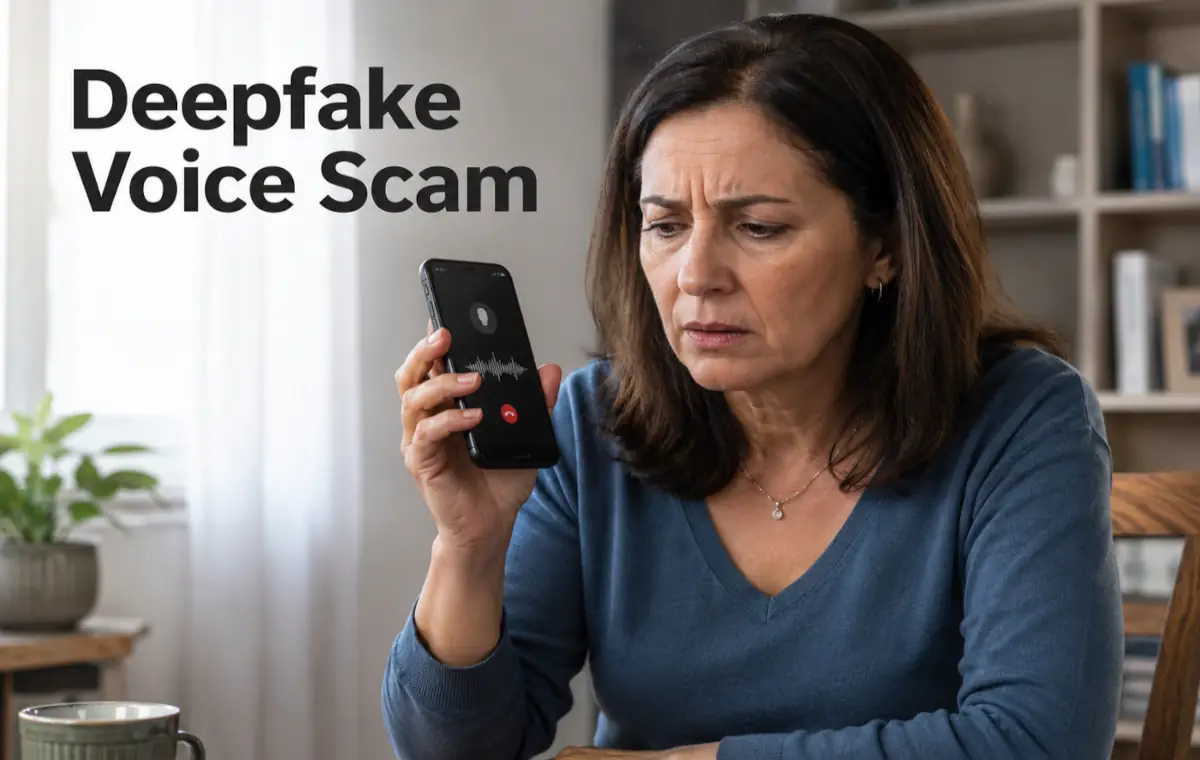 Voice deepfake scams exploit a very human weakness: the trust we place in a familiar voice. A call may seem to come from a child, a parent, a spouse or a colleague in distress, when it is actually a generated or manipulated imitation. The scenario almost always relies on urgency, fear and a request for immediate money. Faced with this type of call, the right reflex is no longer just to listen, but to verify through another channel.
Frauds involving a fake loved one in difficulty already existed before artificial intelligence. A scammer could pretend to be a grandchild, a friend or a family member, claim to have had an accident, be stuck abroad or need urgent financial help. Voice deepfake adds an extra layer of credibility, because the voice may sound closer to that of the person being imitated.
The principle is simple: create an emotional situation in which the victim acts before thinking. The fake loved one speaks quickly, seems panicked, mentions a serious problem and asks for immediate help. Sometimes, a second person then intervenes, presenting themselves as a lawyer, police officer, doctor or administrative official.
Scammers can use artificial intelligence to clone the voice of someone close from a short audio sample. The goal is not necessarily to produce a perfect imitation, but to create enough doubt and pressure to prevent verification.
 Fraudsters can collect fragments of voice from videos posted on social media, voice messages, public content or previous calls. A short sequence may sometimes be enough to generate a credible imitation, especially if the call is brief, stressful and of poor sound quality. Background noise, crying, panic or a poor connection can also hide flaws.
In some scenarios, the scammer does not even need a very advanced imitation. They can use a few words, a short sentence or a recording, then quickly pass the call to an accomplice. The fake lawyer or fake official then takes over and provides the payment instructions.
This method works because it combines several misleading signals: a recognisable voice, a serious situation, a very short deadline and an instruction to be discreet. The victim has no time to analyse the quality of the voice. They focus on the supposed danger.
Voice deepfake scams often take the form of a family call. The person being imitated claims to have had an accident, been arrested, hospitalised, threatened or stuck in an urgent situation. The message is usually short, intense and emotional.
The scenario can also target the professional world. An employee receives a call that seems to come from a manager, executive or colleague, with an urgent request for a bank transfer, prepaid card purchase or transmission of sensitive information. In this case, voice deepfake becomes part of a CEO fraud scheme or a targeted phishing attempt.
The most common variants include:
A familiar voice is no longer enough to prove someone’s identity. The first warning sign is extreme urgency. The caller insists on immediate action: sending money, buying gift cards, making a transfer, sharing a code or not telling anyone.
The second signal is the request for secrecy. Fraudsters often explain that the family, bank, employer or authorities must not be informed. This instruction is designed to isolate the victim and prevent any verification. A real emergency can be stressful, but it does not justify banning all outside checks.
The third signal is a rapid change of speaker. The fake loved one speaks briefly, then a “lawyer”, “police officer” or “official” gives the instructions. This transition makes it possible to use the imitated voice for only a few seconds, then switch to a more classic manipulation.
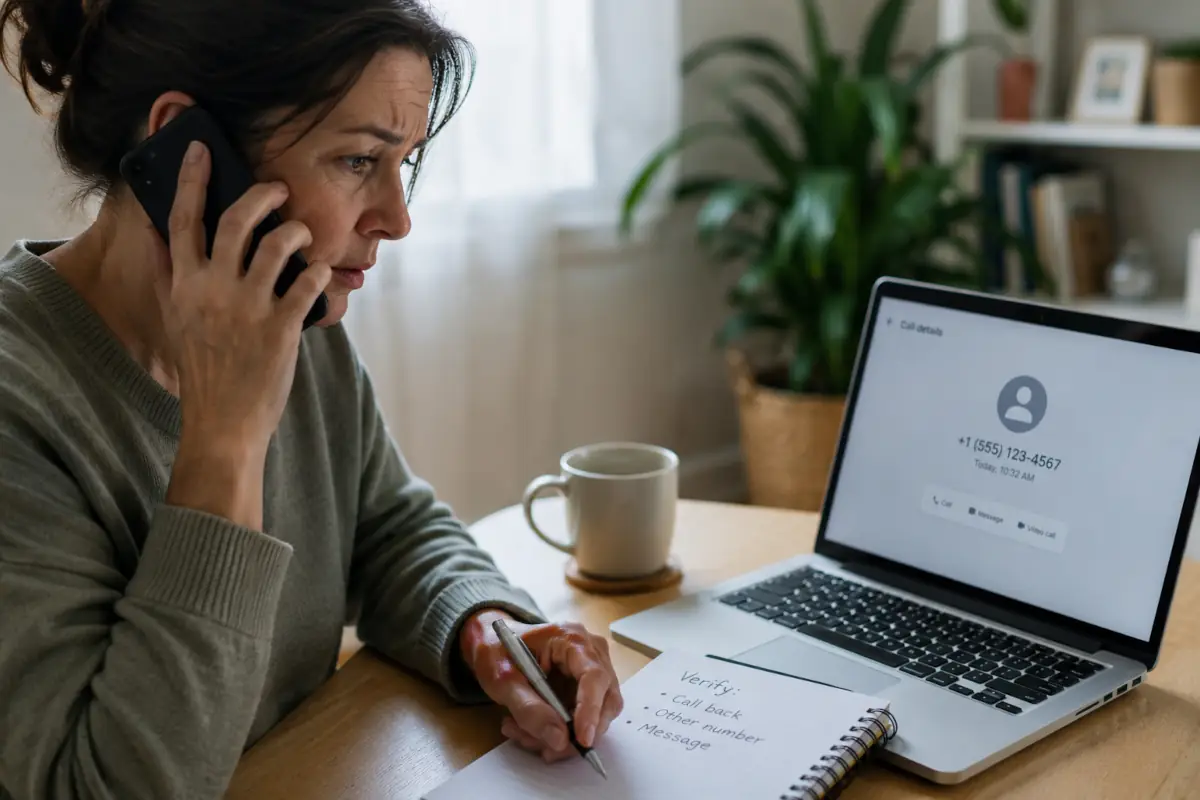 Faced with a worrying call, the best reaction is to end the conversation and call the person back using a number you already know. Do not use the number provided during the call or click on a link sent afterwards. Verification must be done through an independent channel: usual number, another family member, already known messaging service or official professional contact.
A simple phrase can help: “I’ll call you back right away.” If the caller refuses, panics or insists on staying on the line, this is an additional warning sign. The goal is not to debate with the scammer, but to regain control.
It can also be useful to set up a family verification word. This word must not be visible online or easy to guess. It does not replace all checks, but it can serve as a simple barrier in simulated emergency situations.
You should never send money solely on the basis of a voice call. Even if the voice seems convincing, the request must be verified. The payment methods requested in these scams are often chosen for their speed and difficulty of recovery: instant bank transfer, cryptocurrency, vouchers, prepaid cards or money transfer.
You should also not share codes received by text message, banking credentials, copies of documents or passwords. A scammer can use the vocal urgency to obtain information that will then be used for another fraud. Voice deepfake can therefore be the beginning of a broader scenario.
Finally, avoid calling back an unknown number given in the message. Some scenarios seek to prolong the exchange through a fake helpline, fake lawyer or fake administrative service. The rule is always the same: verify by your own means, not with the contact details provided by the caller.
Older people, isolated people or those who are very sensitive to family emergencies can be particularly vulnerable. It is therefore useful to discuss this subject in advance, without being alarmist. A simple family conversation can be enough to establish a rule: no urgent payment will be made without verification through another channel.
Parents can also raise awareness among teenagers and young adults. Public videos, voice messages or content shared online can provide material for imitations. This does not mean banning all posting, but understanding that the voice is now part of the personal data that can be exploited.
In a professional setting, companies must remind staff that a bank transfer or sensitive transmission should never depend on a single call, even from an executive. A double-validation procedure, known in advance, greatly reduces the risk.
If you have received a suspicious call, keep the available traces: number, time, voice message, screenshots, contact details provided, possible proof of payment and content of the exchanges. These elements can help report the attempt and understand the scenario. You can consult official anti-fraud platforms for advice depending on the situation.
If a payment has been made, you must contact your bank immediately. Recovery is not guaranteed, especially if the payment is instant or made through a method that is difficult to reverse, but reacting quickly can matter. It is also advisable to warn the real person being imitated, because other people close to them may be targeted.
Voice deepfake scams show that a voice is no longer sufficient proof. A panicked call, even a very convincing one, must be verified before any action is taken. The combination of urgency, secrecy and a request for money remains the core of the trap.
To strengthen your reflexes against digital manipulation, you can consult the simple rules that limit most online risks. If you think you have been targeted or have sent money, the post-fraud support guide can help organise the first steps. To train yourself to recognise pressure scenarios, the practical online scam simulator can also be useful.