Blog post: Online security
Hello and welcome to Scam Or Reliable!

Blog post: Online security
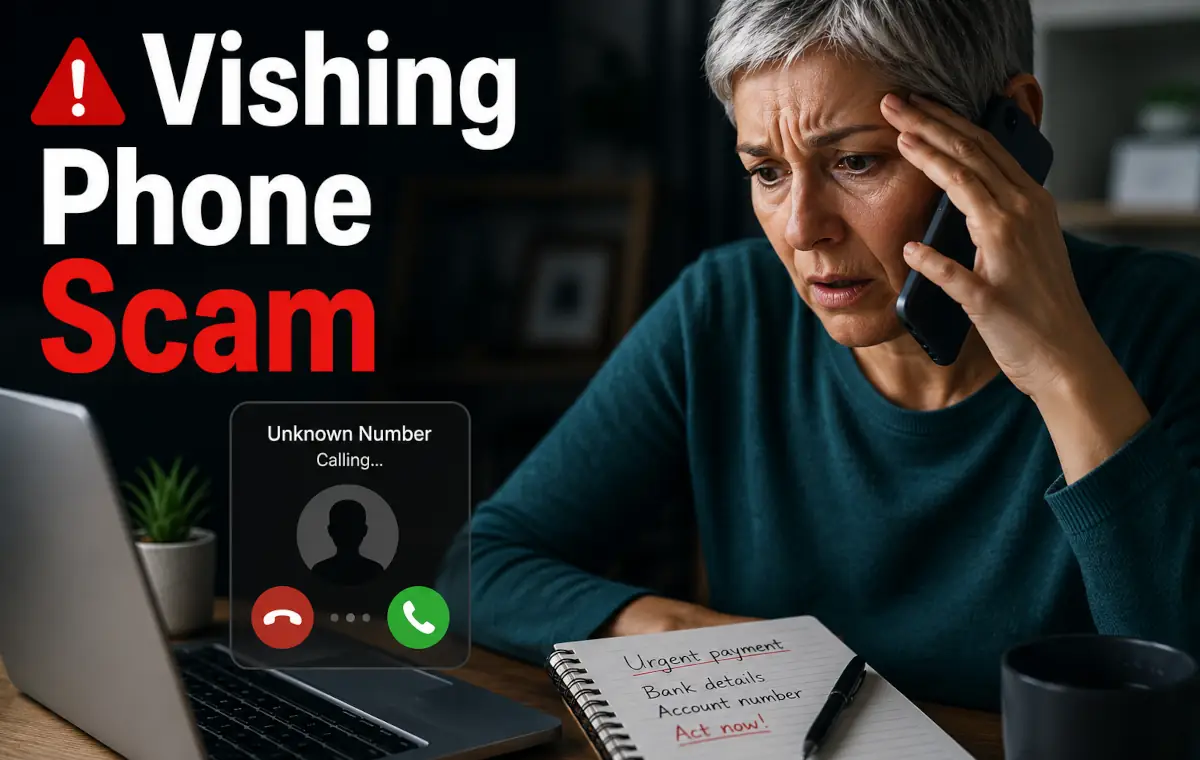 Vishing, a scam carried out by phone, is currently being reported as sharply increasing. A recent topic reminds us that these fraudulent calls do not rely only on a lie, but also on calculated pressure.
The danger concerns anyone contacted directly by phone, sometimes when they least expect it.
Understanding these mechanisms helps you regain control before replying too quickly.
Vishing has a particular place among scams because it uses the voice and direct interaction. Unlike a written message that can be reread calmly, a call imposes an immediate rhythm and sometimes gives the impression that you must respond without delay. It is precisely this direct dimension that makes the subject current, as phone scams are reported to be rising this year.
The term vishing links fraud with voice communication. The caller generally seeks to create a situation that seems urgent, confusing or important, in order to obtain a quick reaction. The potential victim does not always have time to verify what is being said, especially if the conversation is conducted with confidence.
This reported increase does not mean that every unknown call is fraudulent. Rather, it is a reminder that a call can become a channel for fraud when it pushes you to act in haste. The right attitude is therefore to recognise the warning signs, slow down the exchange and verify by yourself before making any decision.
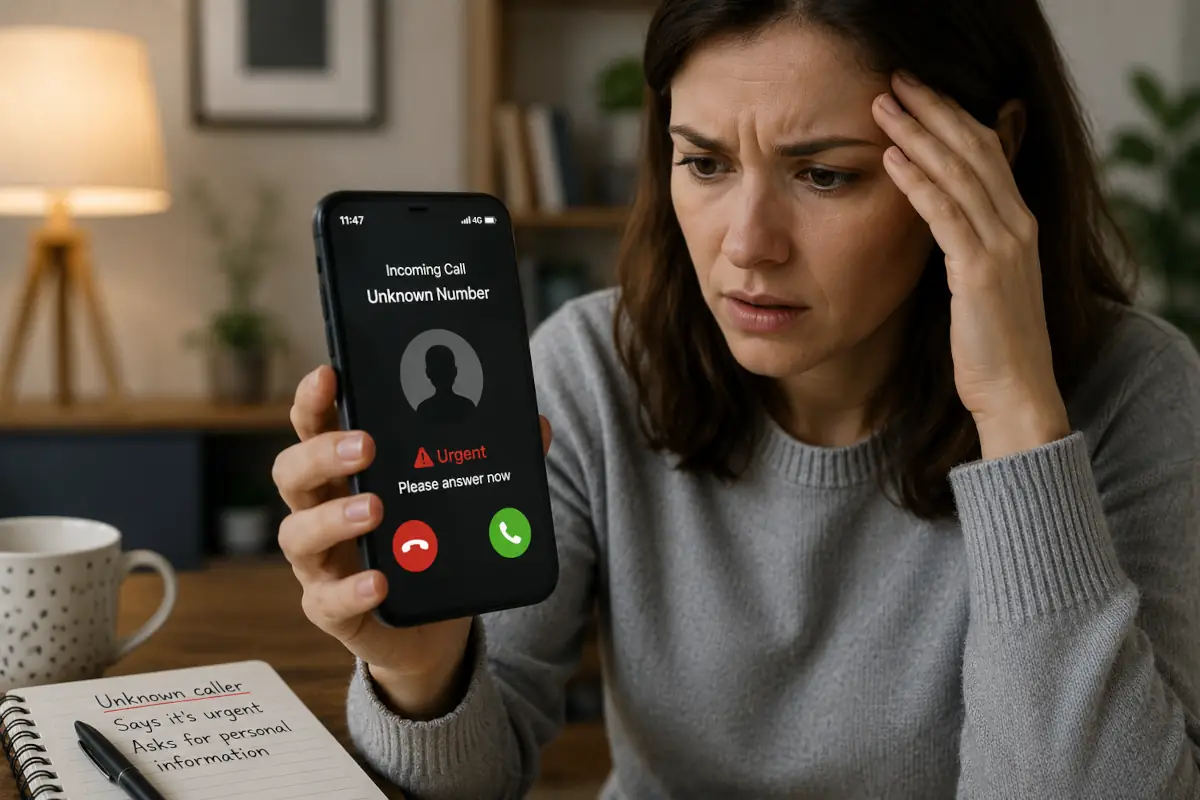 Pressure is one of the most important levers in fraudulent calls. The objective is not only to convince, but to reduce the time available for reflection. The more pressured the person called feels, the less they take the necessary distance to identify inconsistencies.
A fraudulent call can give the impression that a situation must be resolved immediately. The person speaking may insist, cut off hesitation or repeat that a delay would make the problem worse. This staging is designed to turn a simple conversation into an apparent emergency.
Vishing also exploits the fact that a call is interactive. The caller can adapt their speech to the reactions of the person being called, rephrase, reassure or, on the contrary, intensify the pressure. This flexibility makes voice fraud harder to treat as a simple suspicious message.
A fraudulent call is not always easy to recognise in the first few seconds. It may begin in an ordinary way, with a polite tone and information presented as credible. Doubt often appears when the person speaking tries to speed up the conversation or direct the person towards a specific action.
The first signal to watch for is time pressure. If the caller refuses to allow time to call back, verify or consult someone close, caution is required. A legitimate exchange should allow reasonable verification without threats or excessive insistence.
Another sign is an unusual request. Without inventing any specific scenario, remember that a request made by phone becomes suspicious when it forces you to communicate, validate or carry out something urgently. The form of the request matters as much as its content: haste, a directive tone and refusal of a pause should raise an alert.
These signs do not always prove on their own that it is a scam. However, their accumulation justifies interrupting the exchange and taking back control. If in doubt, it is better to hang up calmly than to continue a conversation conducted under pressure.
The voice creates an impression of presence. It can give a feeling of seriousness, authority or closeness, even when the call is fraudulent. This is one of the reasons why vishing requires specific reflexes.
When a person speaks live, they can immediately react to objections. If the victim hesitates, the caller can reassure them. If they ask questions, the caller can rephrase. If they ask for time, the caller can push again by invoking urgency.
This dynamic makes the conversation more engaging than a simple text. The person called may feel obliged to respond, justify themselves or continue out of politeness. Yet in a suspicious situation, politeness should never prevent you from ending the call.
It is useful to remember that a call has no evidential value in itself. Just because someone speaks confidently does not mean they are telling the truth. Verification must take place outside the conversation, using contact details or channels that you choose yourself.
 Faced with a call that puts pressure on you, the best reflex is to slow down. There is no need to convince the caller, debate or prove that you are right. The objective is simply to get out of the emergency situation created by the conversation.
Hanging up is not discourteous when the call seems suspicious. It is a precautionary measure. A person acting in good faith will generally accept that you verify through another means, while a fraudster will often try to keep you in the exchange.
Protection relies on simple and consistent actions. They help reduce the impact of pressure and avoid decisions made too quickly. It is better to apply them as soon as the first doubts appear, rather than after prolonging an uncomfortable conversation.
These reflexes are all the more useful because vishing relies on isolation. When the person called takes time back and exits the conversation, the pressure mechanism loses much of its effectiveness. The simplest rule therefore remains: no urgent call should force you to act without verification.
A fraudulent call can leave a feeling of stress, even after hanging up. This reaction is normal, because the exchange was designed precisely to provoke a quick response. However, decisions made just after the call may also be influenced by this residual pressure.
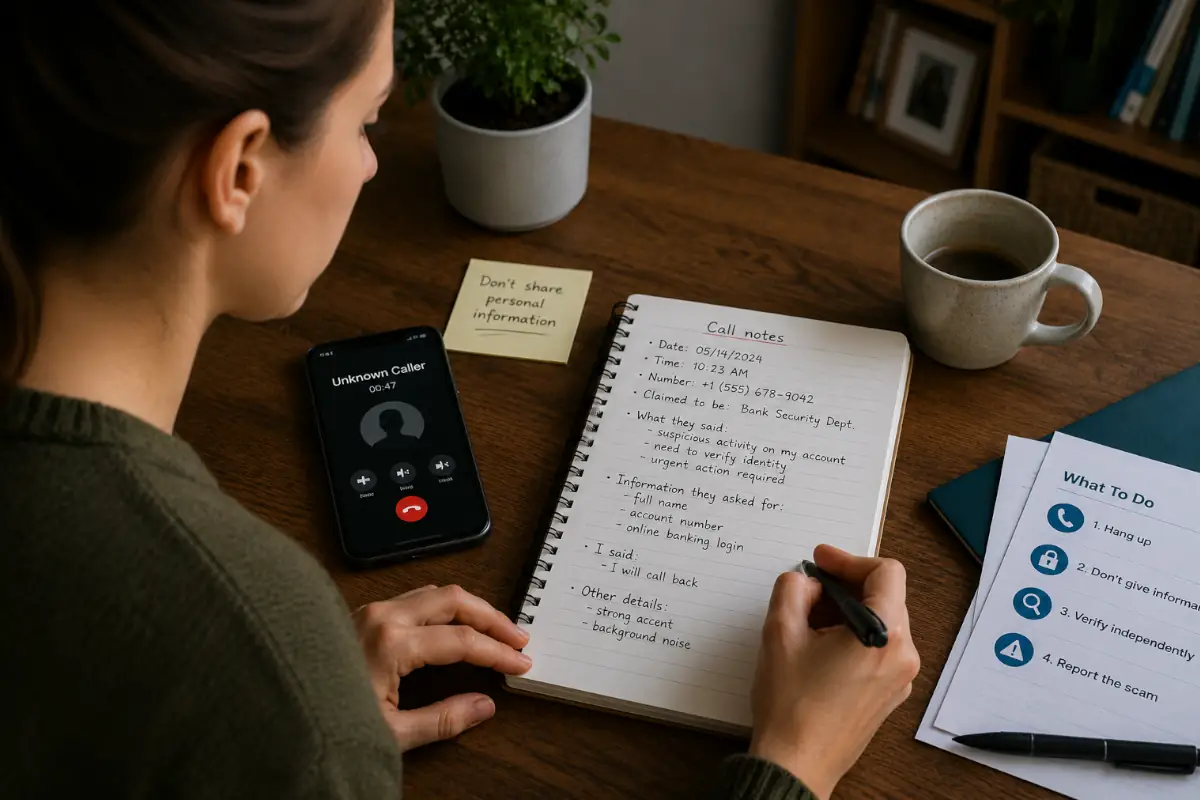
Avoid automatically calling back the displayed number or following an instruction given orally. You should also avoid minimising the incident if the call was insistent, repetitive or destabilising. A simple record of what happened can be useful to clarify the situation or ask for help.
It is also better not to remain alone with doubt. Vishing works better when the potential victim hesitates in silence. Explaining the call to someone you trust often helps identify inconsistencies more quickly and calm the sense of urgency felt.
 Fraudulent call scenarios can change, but their logic often remains similar. Vishing seeks to obtain a quick reaction through a direct conversation. That is why learning to recognise the pressure mechanism is more effective than trying to know every possible variant.
The essential question to ask yourself is simple: does this call leave me time to verify? If the answer is no, the risk increases. A caller who refuses a pause, verification or an independent call-back creates a situation that is unfavourable to a calm decision.
You should also observe your own feelings. A sensation of panic, confusion or immediate obligation can be a useful signal. Fraudsters seek precisely to provoke this state, because it makes the person less able to analyse calmly.
Vigilance does not mean mistrusting everyone. It means setting a clear boundary: no important decision should be made only because a voice on the phone demands it. This simple boundary protects against a large part of manipulations based on urgency.
If a call led to an action you regret, the first step is to stop any further interaction with the caller. Making contact again in haste can prolong the pressure and worsen the confusion. The most important thing is to return to a calm, documented and supported approach if necessary.
It is advisable to gather the available elements. The displayed number, the time of the call, the approximate duration, the notable words and any instructions received can help understand what happened. Even if not all details are available, quickly noting what you remember can prevent omissions.
Depending on the situation, it may be relevant to seek advice from a reliable source or use a reporting support tool. The goal is not to promise a result, but not to remain alone with doubt. A structured reaction helps limit confusion after a pressured call.
Vishing is currently reported as sharply increasing, and its effectiveness relies largely on the pressure exerted during the call. To protect yourself, remember one simple rule: slow down, hang up if necessary, then verify through an independent means. The voice can be impressive, but it should never replace calm verification.
To strengthen your reflexes, you can consult our guide on the essential actions against scams, browse our key points for understanding and reacting to fraud, or use the dedicated support for fraud victims if a suspicious call has already put you in difficulty.