Blog post: Online security
Hello and welcome to Scam Or Reliable!

Blog post: Online security
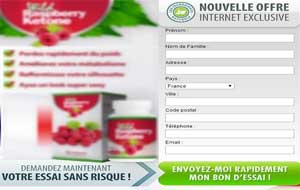 Looking for bargains online? While browsing the many websites out there, have you ever come across an irresistible offer? An invitation to try a product almost for free because you only have to pay the shipping costs?
Many websites offer free trials, $1 offers, discovery samples or trial periods with no apparent commitment. But are you aware of what can sometimes be hiding behind this kind of offer?
Have you ever wondered how some merchants manage to make a profit from an almost free product? And how their business keeps growing? It is precisely this free-trial concept, when it hides a subscription or recurring charges, that we examine in this article.
Let us take a closer look at this phenomenon, which is still spreading online, especially through social media ads, aggressive sales pages and limited-time offers.
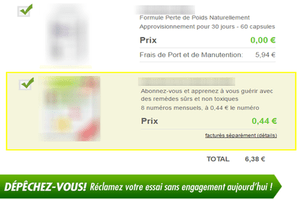 Let us take the example of this free-trial invitation shown in this image.
We chose it at random online to illustrate our point.
If the seller’s website is to be believed, you are entitled to a 1-month supply, that is 60 capsules, for the price of €0.00.
The only charge you are invited to pay is the shipping cost, namely €5.94. As a bonus, you are also entitled to a guide costing the modest sum of €0.44.
So in total, you are only going to pay €6.38 and you will walk away with a weight-loss product that covers one month of treatment and a guide containing 8 monthly issues of safe remedies.
That, in short, is what this type of free trial consists of: a very attractive introductory offer, often presented as risk-free, even though it can sometimes lead to a subscription, automatic resupply or recurring charges.
Interesting, isn’t it?
To make it even more irresistible, followers of this method fill their website with messages and banners urging you to click quickly to place your order as fast as possible.
Their goal: stop you from thinking too much!
Psychological pressure to push you into taking action, fast, very fast.
Messages such as: “Only 10 offers left today” (with a countdown timer to make it more persuasive); “Hurry! Claim your free no-commitment trial today”; “Offer reserved for the first 50 visitors”; “Your cart expires in a few minutes”; …
But let us come back down to earth and take the time to ask a few questions: what does this manufacturer hope to gain by doing this?
Suppose several thousand internet users all decide to place an order over a short period of time. How will this seller manage to handle those transactions without skirting bankruptcy? And how does the seller expect to profit from it?
On top of that, this price we are paying clearly does not even cover the production cost of the product itself, so how does this manufacturer manage to keep the business going?
I will answer you right away.
The unscrupulous seller behind this offer is often trying to obtain your bank card details so they can later make charges to your account, sometimes under the cover of a subscription mentioned in small print.
In other words, it is a well-crafted trap!
If you order a free trial without reading the conditions, you are certainly taking the risk of paying dearly for it, perhaps very dearly.
The hidden clauses generally include joining a club, a subscription, an online service, a paid loyalty program or a periodic resupply plan.
Some websites “impose” a clause written in small print, buried in the terms and conditions, shown after the payment button or hidden behind a box that is already ticked, a barely visible link or a deliberately confusing presentation.
A clause inserted in a way designed to deceive your vigilance. Sometimes the entire terms-and-conditions page is written in characters that are unreadable or difficult to read in order to discourage you from reading it.
But you should know that you may still be considered bound by these clauses if you accepted the offer without checking the conditions.
In short, the greatest risk facing you is repeated charges to your bank account.
This remains true even if you do not use the products you received, or the ones you may receive in the following months.
 The first thing to check before ordering a free trial is the Terms and Conditions page.
You need to read it in full, carefully, and examine every clause and every sentence closely.
If the website you are on does not have any terms and conditions, that is all the more reason to avoid it.
Ads on social media should be checked very carefully because they are a real breeding ground for scams. Never click on an online ad without doing some research about it first.
If the website in question does display a terms-and-conditions page (usually located at the bottom), then start by reading it and check for any mention of a subscription, automatic renewal, a VIP program, a member club, a paid trial period after a few days or permission for resupply.
Do not forget to also check the return policy and conditions, the seller’s real identity, the physical address, the company’s country, the contact methods, cancellation rights, independent reviews and the exact cancellation procedure. If you have doubts about the reliability of a shop, a brand or a service, you can also use the AI-assisted reliability scan to obtain a summary of the available public signals.
By placing your order, you will be enrolled in our auto-renewal program.
This program will allow you to try the product and on the 18th day, you will be charged €69.95.
After that, you will receive our product and be charged €69.95 (+ shipping costs) every 30 days until you cancel your subscription.
You may cancel or modify your subscription at any time by calling customer service.
By clicking to place your order, you declare that you have read and understood the terms of this offer and that you understand you will be responsible for paying all charges billed for the products that have been shipped to you, and that will be sent to you in the future, if you do not notify customer service to stop your order.
That is what you miss if you do not take the time to read the general terms and conditions page.
It is clear that this can reflect bad faith when important information is deliberately buried, delayed or presented ambiguously. But realistically, from a practical standpoint, you may then have to dispute payments that the seller will present as having been accepted.
So, and still speaking legally, you should never validate an offer without understanding the total price, the length of the commitment, the renewal conditions and the cancellation procedure.
In the example we have just cited, it says that in order to stop these repeated charges and endless product shipments, you must contact customer service.
Nothing could be simpler, and there you go, the problem is solved.
Well no, the problem is not solved. Why?
Quite simply because that service is sometimes unreachable, because it replies in another language, because it redirects you to a form that does not work or because it multiplies obstacles to delay the cancellation.
So how do you get out of this vicious circle?
 If you have fallen into the free-trial trap and the damage is done, the first thing to do is gather the evidence: a screenshot of the sales page, the terms and conditions, the order confirmation, emails, payment statements, the seller’s name and any exchanges with customer service.
If customer support is ignoring you, contact your bank quickly to report the charges, ask about the available options and, if necessary, block your bank card or dispute the transactions concerned.
Of course, many people ask us whether they risk anything. Could they, for example, face legal action?
Fortunately, most websites using this kind of fraudulent tactic do not comply with the law, which often limits their ability to seriously pursue disputed sums.
In other words, they do not comply with the mandatory legal information required by the competent authorities.
For example, you may find neither the name of the company selling the product, nor its physical address, nor its registration number, or those details may be inconsistent, located in another country, copied from another business or impossible to verify.
I do say fortunately, because otherwise you might have to justify your dispute and your actions very precisely.
On the other hand, you should know that the law protects your rights. Below are links to consult the legal texts and official rules governing this type of practice:
– legislation.gov.uk (UK). The Consumer Protection from Unfair Trading Regulations 2008. Misleading actions. (https://www.legislation.gov.uk/uksi/2008/1277/regulation/5/made). – FTC (US). Restore Online Shoppers’ Confidence Act (ROSCA). (https://www.ftc.gov/system/files/documents/statutes/restore-online-shoppers-confidence-act/online-shoppers-enrolled.pdf).
– legislation.gov.uk (UK). The Consumer Contracts (Information, Cancellation and Additional Charges) Regulations 2013. Cancellation rights and distance contracts. (https://www.legislation.gov.uk/uksi/2013/3134/regulation/29/made). – FTC (US). Negative Option Rule. (https://www.ftc.gov/legal-library/browse/rules/negative-option-rule).
 In my view, it is better to avoid free trials when they concern an unknown website, a miracle product, an overly aggressive offer or a page that asks for a bank card without clearly explaining what will happen next.
If a manufacturer or seller lies about its business information and uses a tactic intended to mislead you, then how can you be sure about the composition stated on its product?
How can you be sure of the effectiveness and, above all, the safety of that product?
It is hard to swallow a pill coming from such a manufacturer without being full of doubts. Are you sure you want to bet your health on this kind of thing?
If, despite everything, you still want to order a free trial, which you do at your own risk, you should know that there are safer ways.
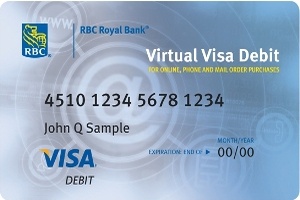
This is notably the case with virtual cards, single-use cards, temporary spending limits or payment methods that make it possible to limit the amount exposed. Learn about these payment methods and favor them in this kind of transaction.
In all cases, you will reduce the risk that your “official” card will be charged without your knowledge. And if you have already been trapped, the interactive guide for fraud victims can help you organize the first steps, while the fraud reporting assistant can direct you to the appropriate reporting channel.
Beyond the risk of losing money, which can easily reach very large amounts, the object of the free trial is itself a risk that should not be neglected.
It may even be the greatest risk of all.
And as stated above, if a seller is prepared to deceive you about the payment terms, how can you be sure they are not selling you a product with no effect?
Or worse, a product that may harm your health? Before giving in to an offer that seems too good to be true, take the time to verify, compare sources and train yourself to spot pressure tactics with the anti-fraud crash test.