Blog post: Online security
Hello and welcome to Scam Or Reliable!

Blog post: Online security
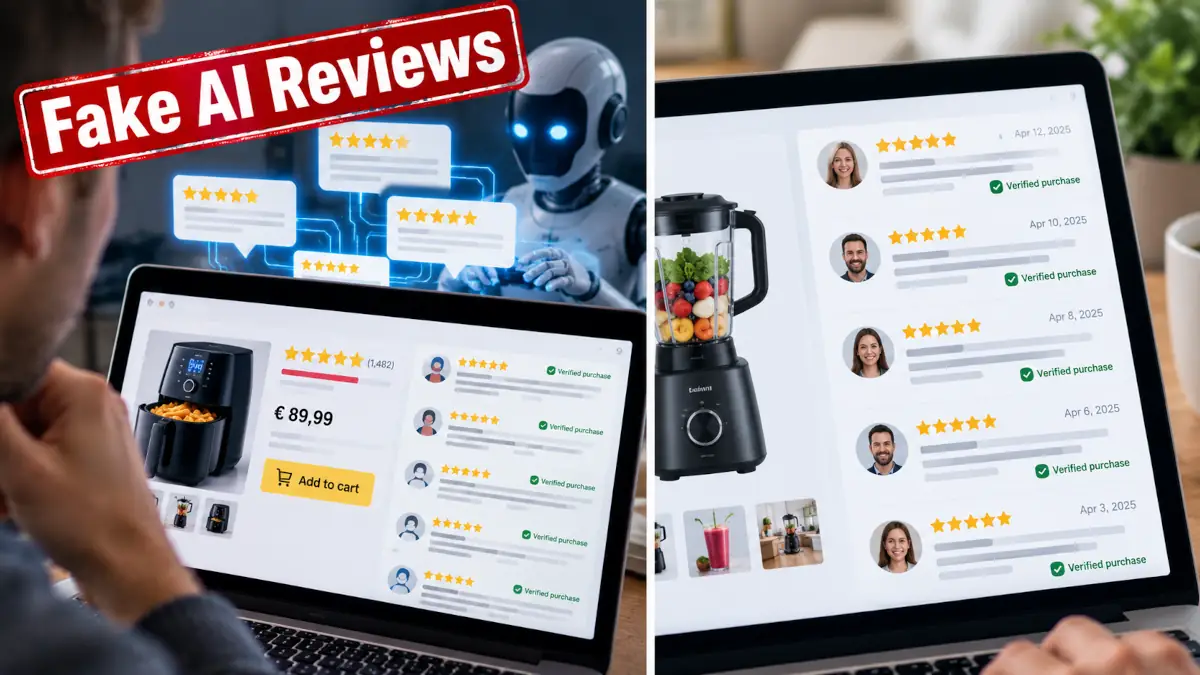 Customer reviews have long served as a convenient shortcut before ordering a product, booking a service or choosing a retailer. Artificial intelligence, however, is changing the landscape: it can produce convincing reviews in large numbers, tailored to the tone of a particular platform. These AI-generated fake reviews blur the line between genuine experiences and disguised promotional messages, directly influencing your purchasing decisions. The risk is not simply buying a disappointing product, but believing in popularity that does not actually exist.
An artificial review no longer necessarily looks like a clumsy, repetitive message riddled with mistakes. Large language models can imitate human writing, vary their wording and create the impression that a consumer is describing a personal experience. Readers are then presented with a succession of consistent, sometimes enthusiastic testimonials that build confidence before they have even examined the product’s actual features. This accumulation influences judgement because a high rating and numerous reassuring comments often create the impression that other buyers have already confirmed the product is a good choice.
The most obvious mechanism is artificial popularity. A page flooded with glowing reviews can make a mediocre product appear trustworthy or give a recently launched offer a misleading sense of established credibility. The problem becomes more serious when the reviews go beyond repeating “great product” and instead describe specific uses, emotions or minor imperfections designed to sound genuine. The fake review then becomes a persuasive tool that resembles a personal recommendation far more than an advertisement.
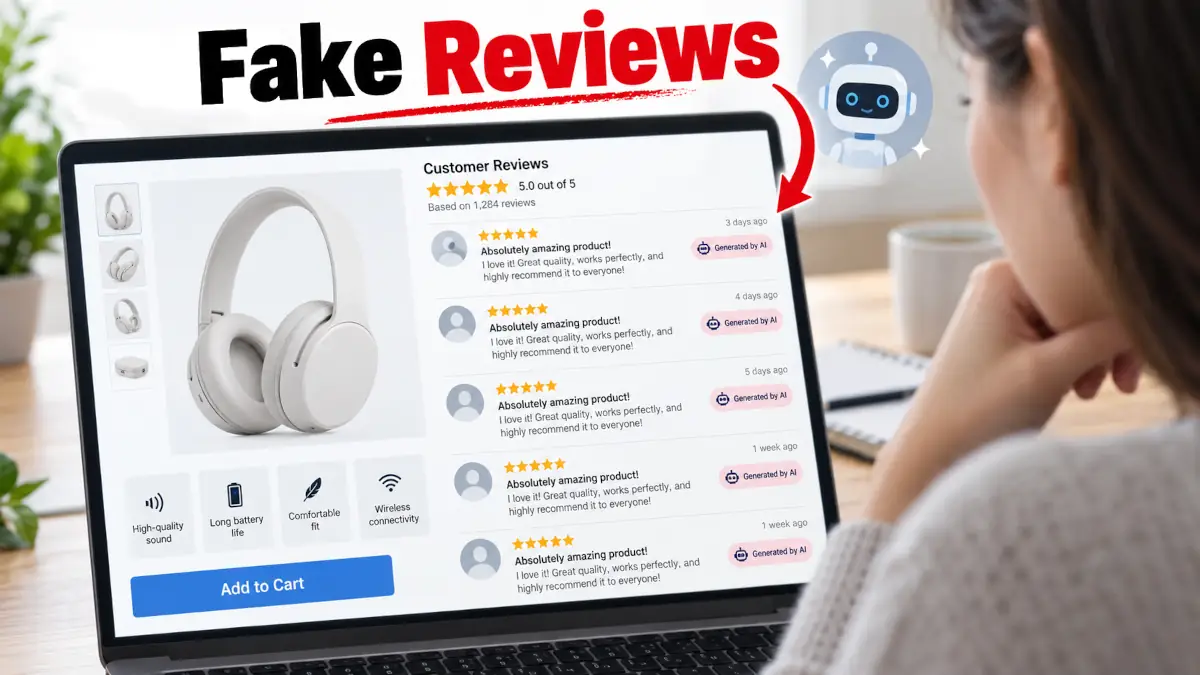
Fake reviews do more than add noise around a product. They change the order in which you establish trust: the rating, number of stars and positive testimonials sometimes take priority over the price, terms of sale or seller’s reputation. A product listing with numerous reviews may therefore seem less risky than another, even when those reviews are not based on any genuine experience. Consumers are pushed towards making a quick decision, convinced that many other people have already tried and approved the offer.
This manipulation also works because it exploits a simple instinct: nobody wants to be the first to take a risk. When dozens of people appear satisfied, the purchase seems to have received collective approval. AI reinforces this bias by producing varied testimonials that can reflect different buyer profiles, different uses and different potential objections. Rather than simply describing a lived experience, the review anticipates your doubts.
The consequences are economic, but they also affect competition. You may buy an item that fails to live up to its advertised promises, while an honest business relying on genuine customer feedback becomes less visible. From a legal perspective, publishing or commissioning fake reviews constitutes a deceptive practice subject to substantial penalties. In the United Kingdom, businesses can face fines of up to 10% of their global turnover, with criminal proceedings also possible in certain circumstances. In the United States, the Federal Trade Commission’s rules prohibit various forms of fake reviews and testimonials, with civil penalties available for knowing violations. For buyers, the priority therefore remains avoiding confusion between a large number of reviews and genuine reliability.
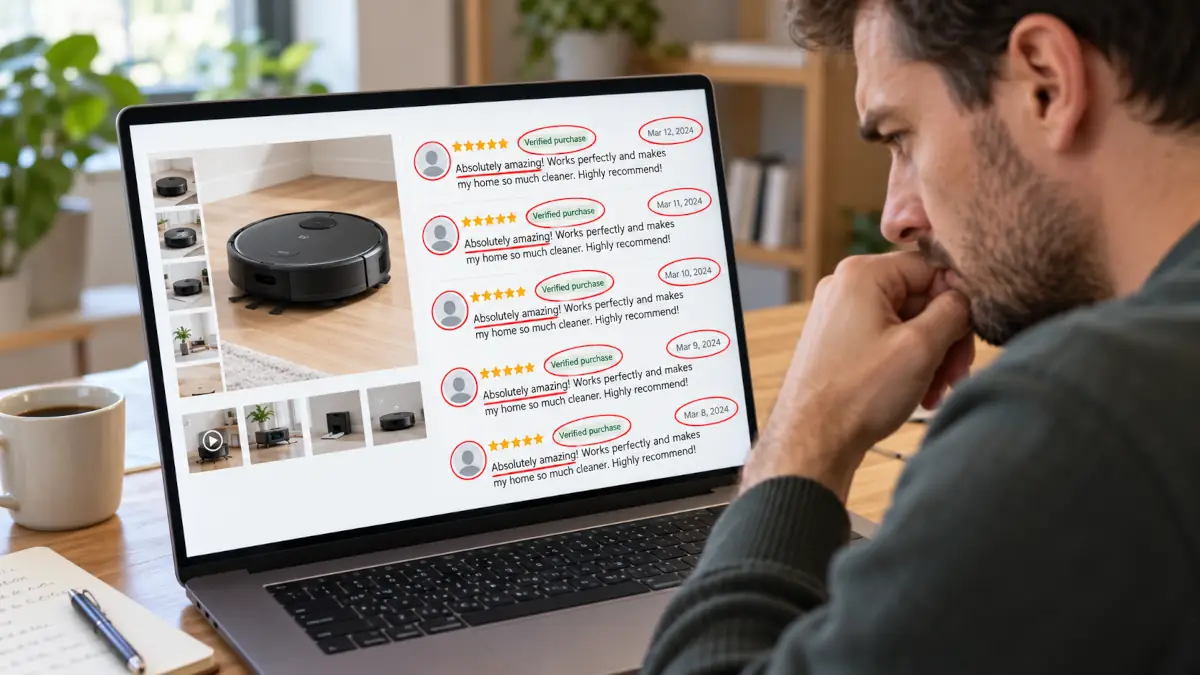 An AI-generated fake review can be difficult to identify individually, especially when it is well written. The best approach is to examine the product listing as a whole rather than focusing on a single comment. Inconsistencies often become apparent in the frequency of publication, similarities between the arguments presented or discrepancies between enthusiastic praise and verifiable information. A product may have an impressive average rating while still displaying subtle signs of fabricated testimonials.
Caution is particularly important when reviews are plentiful but lack specific details. Genuine feedback often mentions something practical: a size, delivery experience, particular use, limitation or comparison with initial expectations. A fake review, by contrast, may remain flattering without providing anything genuinely verifiable. It may also appear balanced by including a minor criticism, while systematically concluding that the purchase is still excellent.
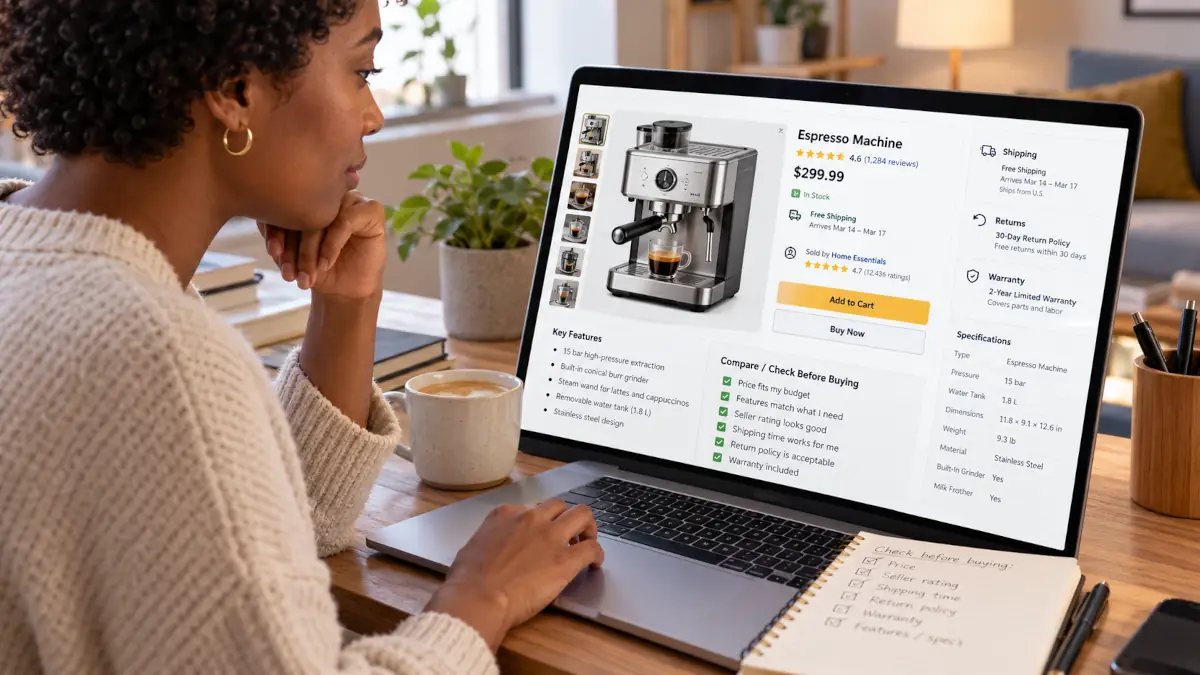
The best protection is to slow down the purchasing process precisely when customer reviews make you want to act quickly. Before confirming an order, a few checks are often enough to put those comments into perspective. The aim is not to suspect every review, but to avoid letting an overall rating make the decision for you. A legitimate offer should be assessed using several indicators, not just testimonials displayed on the sales page.
Start by reading negative or mixed reviews, as they sometimes describe specific shortcomings that positive comments overlook. Next, compare the information in the product listing with what the reviews say: if the testimonials make impressive promises but the product description remains vague, caution is advisable. Also examine the seller, their contact details, return conditions and the overall consistency of the website. A highly persuasive page is never a substitute for clear information about what you are buying and how you can exercise your rights if the product is unsuitable.
Discovering afterwards that reviews appeared artificial does not mean you have to leave the situation unchallenged. The first step is to gather the available evidence: screenshots of the product listing, reviews you consulted, order confirmation, correspondence with the seller and the terms displayed at the time of purchase. This information can help establish what happened and clearly explain the situation to customer support, a platform or a relevant organisation. The more factual your evidence, the less your complaint depends on an impression that may be difficult to demonstrate.
If the product you receive does not match what was advertised, contact the seller or platform first and explain the situation precisely. Describe what was promised, what you actually received and how the reviews may have contributed to a misleading purchasing decision. Avoid general accusations without supporting evidence; focus instead on dated facts and retained documents. When the circumstances suggest a misleading commercial practice, official reporting channels such as Trading Standards (UK) or the Federal Trade Commission (US) may be appropriate for reporting a consumer protection issue. However, reporting the matter does not replace contacting the seller or platform directly to seek a resolution.
Nearly 92% of consumers now question the authenticity of online reviews. This figure illustrates a breakdown in trust: people still consult reviews, but no longer automatically accept them as independent testimonials. Artificial intelligence intensifies this distrust because it makes the warning signs that once helped identify crude fake reviews less obvious. The problem is therefore not the existence of customer reviews, but the growing difficulty of distinguishing genuine experiences from content created to influence purchasing decisions.
This situation calls for a change in habits. A review can be helpful, but it should never replace an assessment of the offer, the seller and the purchasing conditions. Platforms are working to moderate abuse, but automated content generation can adapt to circumvent certain controls. Consumers therefore benefit from treating reviews as one piece of the puzzle, never as a guarantee.
AI-generated fake customer reviews manipulate purchasing decisions by giving products or services credibility that may be entirely artificial. The most effective response remains careful reading, supported by simple checks on the seller, terms of sale and consistency of the testimonials. To strengthen your ability to recognise warning signs, you can consult our guide to essential precautions before placing your trust in an online offer, assess a questionable offer using our suspicious advertisement or offer analysis tool, or explore the steps you can take through our comprehensive guide to understanding and responding to fraud. Reviews remain useful when considered as part of a broader assessment: maintaining this critical distance is what reduces the risk of making a purchase based on an illusion of popularity.