Posted by René Ronse
Alert : Discounted Gift Cards – Christmas Bargains That Are Too Good to Be True
Updated on 13 November 2026.
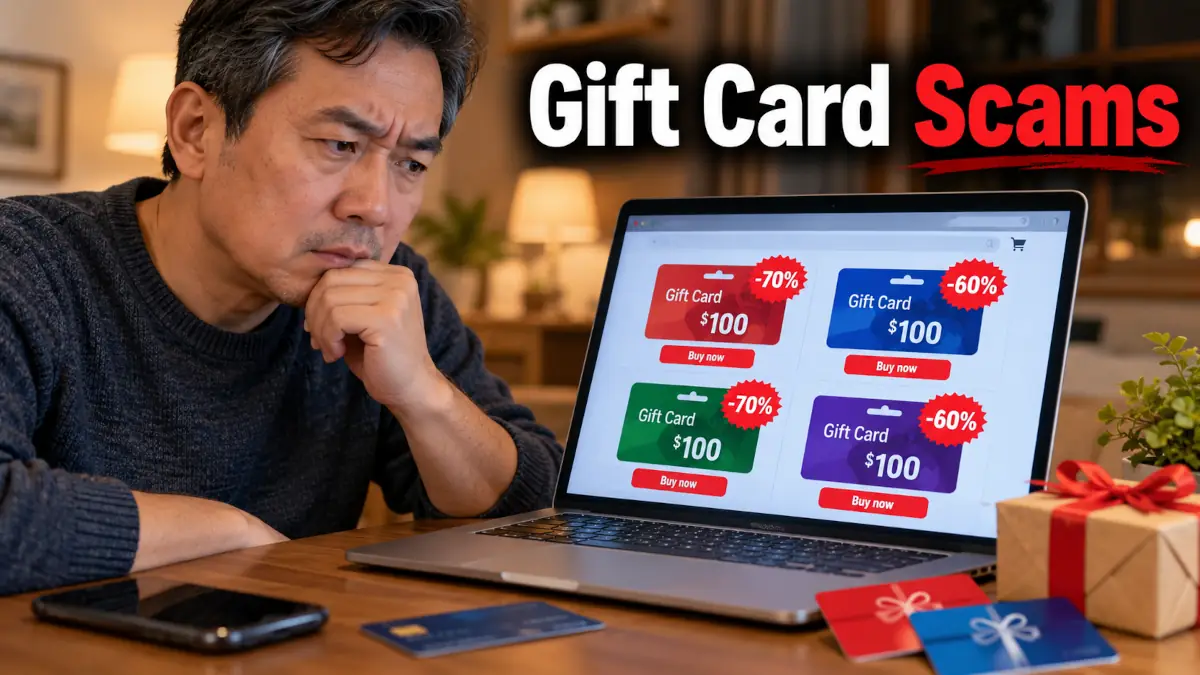 Scammers exploit gift card promotions to deceive consumers: fake codes, cards with their balances already drained, rigged competitions and fraudulent websites can quickly turn a Christmas purchase into an unexpected financial loss.
Stay vigilant: before paying for or giving someone a gift card, check these points to avoid handing your money to a scammer.
Discounted Gift Card Scam
The fraud involves stealing the value of a gift card before it can be used, or selling supposedly valid codes that cannot actually be used to make any purchases. It occurs in physical stores, online, through messages, on social media and via certain classified advertisements.
How the Scam Works
In stores, fraudsters may copy a card’s details, conceal an area that has already been scratched off or attach a fake barcode so that the money paid activates a different card. Online, they rely on websites imitating well-known retailers, offers that seem too good to be true, fake competitions or private sellers who disappear after receiving payment. In some cases, victims receive a fabricated code, a card that has already been used or have their banking details stolen.
Warning signs: an unbelievably large discount, an unusual website address, spelling mistakes in the URL, a request to pay a small fee to receive a gift, a card with a visibly damaged PIN area, a barcode sticker, an unknown seller demanding a bank transfer, or someone insisting on payment using gift cards.
Some Practical Tips:
- 🛒 Inspect the card before buying: run your finger over the barcode and reject any card with a raised surface, a suspicious sticker or signs of tampering.
- 🔐 Examine the PIN area: the protective covering should be intact, clean and firmly attached. If it appears scratched or reapplied, report the card to the store’s customer service desk.
- 🎁 Choose better-protected cards: favour cards kept behind the counter or supplied in their original sealed packaging rather than those freely accessible on store shelves.
- 🌐 Buy directly from trusted sources: use retailers’ official websites or authorised resellers, without following a link received in a message.
- 💸 Avoid unrealistic discounts: a gift card offered at an enormous discount should raise concerns, especially if the offer pressures you to pay quickly.
- 🔎 Check the website address: a changed letter, an added word or an unusual domain extension may indicate a fraudulent copy of a major retailer’s website.
- 📩 Never pay to receive a supposed gift: fake surveys and competitions often use small fees to collect your personal information or banking details.
- 👤 Be cautious with classified advertisements: a private individual selling a discounted gift card may provide one that has already been used or stop responding after receiving payment.
- 🚨 Refuse any demand for payment in gift cards: a government agency, customer service department or legitimate business will not ask you to pay a bill, tax or purchase using this method.
Conclusion
Buying a gift card requires the same precautions as making an online payment: inspect the physical card, verify the website, be wary of overly generous offers and never share your codes with someone pressuring you to act.
If you suspect fraud or encounter a confirmed scam attempt, report it through an official or national reporting platform, use our fraud reporting assistant, and warn your friends and family to help prevent further victims.
For additional guidance, these resources on our website can help you check an offer, message or website before taking action:
Written by : René Ronse
Sources & Methodology : This alert is based on regular monitoring of national reporting platforms, feedback from victims, statements issued by the relevant authorities and other information available at the time of writing or the latest update. Its purpose is to identify the method used, the warning signs and the appropriate steps to take when faced with this type of fraud.
About the author : René Ronse, manager of ArnaqueOuFiable.com. Expert in consumer cybersecurity, specialist in detecting online fraud, product transparency, and digital compliance. He has over 20 years of experience analyzing hidden subscription mechanisms, unreadable terms and conditions, aggressive sales tactics, and deceptive commercial practices on the web.
Last updated : 13 November 2026.
This article is also available in : Français - Deutsch - Español - Italiano - Nederlands - Português




Consumer Reviews and Testimonials