Blog post: Online security
Hello and welcome to Scam Or Reliable!

Blog post: Online security
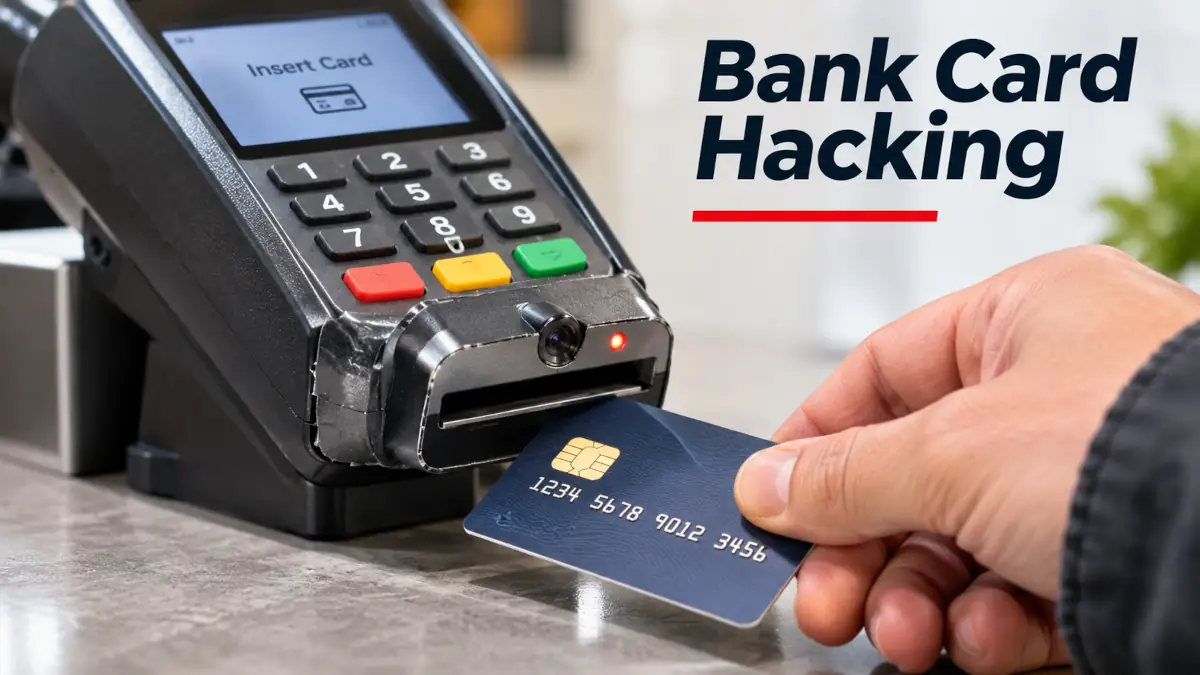
A bank card can be exploited without ever disappearing from its owner’s wallet. Fraud sometimes involves copying data, sometimes intercepting a transaction, and sometimes a very simple manipulation involving the PIN. Understanding these differences helps identify risky situations without being misled by unrealistic scenarios. The most important precautions are to pay attention to the payment environment, protect your codes and act quickly if an unfamiliar transaction appears.
The physical theft of a card remains an obvious risk, but it does not cover all the threats that exist today. During a cash withdrawal, payment or fake banking verification, certain information may be observed, copied or relayed without the card immediately leaving its owner’s possession. The potential for fraud then depends on what has been obtained: a visible card number, magnetic stripe data, electronic communications or a PIN do not offer the same possibilities.
Confusion often arises from the word “copy”. A magnetic stripe can be copied in certain types of fraud, whereas an EMV chip cannot be cloned in the same way because each transaction uses a unique cryptogram. Reading certain data does not therefore automatically mean that a payment can be made, particularly when the fraud requires active interaction with the genuine card.
Contactless technology also needs to be understood within its limitations. NFC operates over very short distances, making scenarios involving the theft of card data from several metres away using a simple smartphone unrealistic under normal conditions. This does not rule out more sophisticated attacks, particularly relay attacks, but these do not rely on some magical ability to read cards remotely.
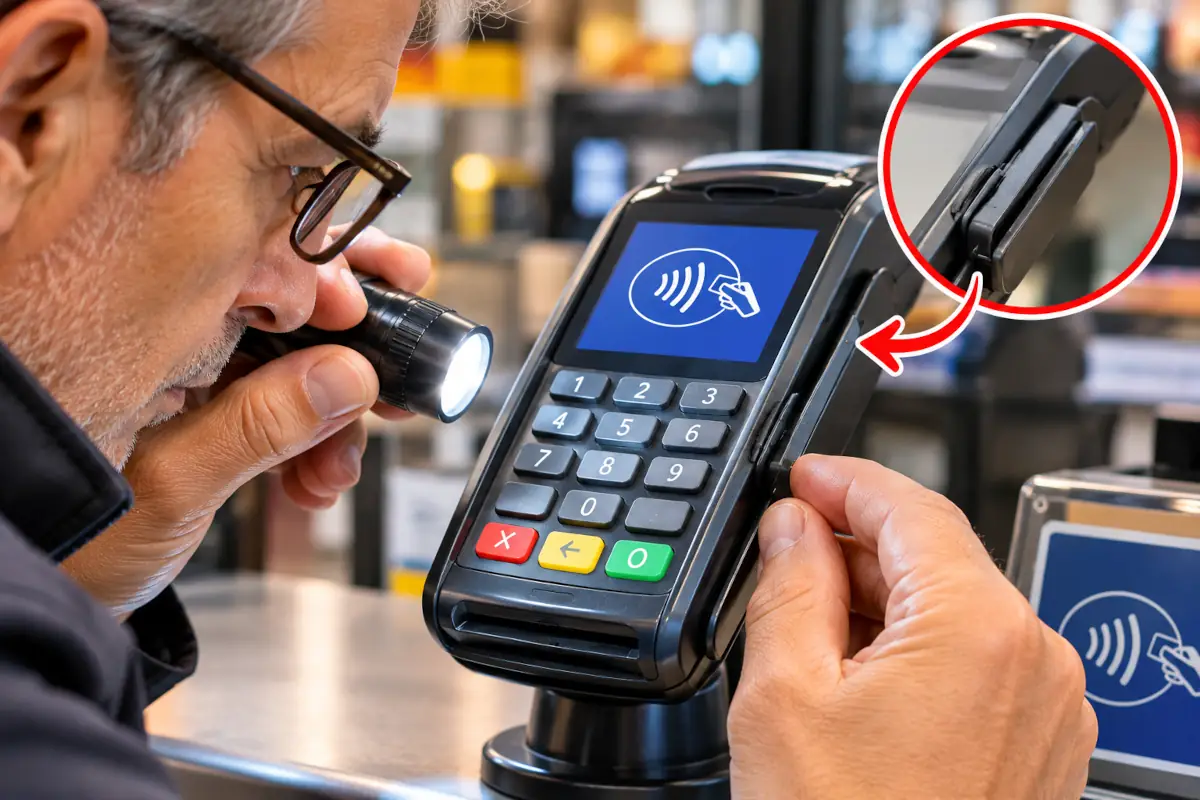 Fraudsters primarily seek to capture useful information at the right moment. Some methods target the card reader itself, while others exploit contactless payments or a compromised terminal. The same outward appearance can conceal very different mechanisms, making observation and caution useful, although neither is sufficient on its own.
Skimming involves copying magnetic stripe data using a fraudulent reader attached to an ATM, payment terminal or another card reader. Deep-insert skimming follows the same principle but uses a miniature device positioned deeper inside an ATM. Bluetooth skimming adds wireless transmission of the collected data, eliminating the need for the fraudster to physically retrieve the installed device.
Shimming targets communications with the bank card’s chip using an ultra-thin device hidden inside the reader. This technique should not be confused with fully cloning an EMV chip: the information that can be exploited depends on what has actually been intercepted. Above all, it demonstrates how an apparently functional payment device can be modified to capture information as a card is used.
For contactless payments, NFC skimming involves reading certain card data using a smartphone or NFC reader. RFID skimming, sometimes called e-pickpocketing, describes discreet reading at close range, for example when a card is inside a pocket, bag or wallet. NFC eavesdropping involves more specialised interception of radio communications between a card and a terminal.
Other attacks go beyond simply reading information: they divert a transaction in progress. An NFC relay attack transmits communications from a card to a remote terminal in real time, potentially enabling a fraudulent transaction when the genuine card remains actively involved in the process. Terminal-to-Terminal Relay follows a similar principle by relaying a transaction between two terminals, one of which is compromised.
Payment terminals can also be modified or infected. POS tampering refers to the physical modification of a terminal, while POS malware is malicious software installed to intercept data from cards used at the terminal. These situations demonstrate that the risk can originate from the payment point itself, rather than solely from the card.
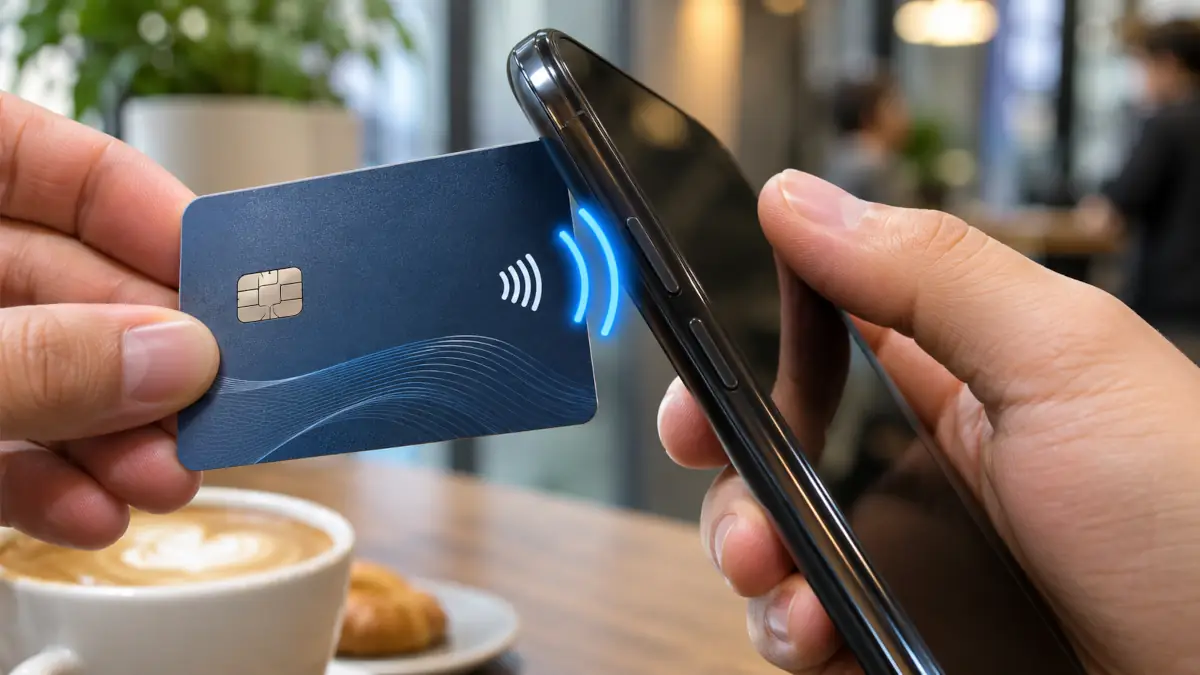 Smartphones have introduced a more deceptive form of fraud because victims may be encouraged to participate in the process themselves. A malicious application may ask users to hold their bank card against their phone under the pretext of banking verification. The danger increases when the request also involves entering a PIN or following instructions received by message.
NGate is an example of a malicious Android application capable of reading NFC communications from a card held against a phone and transmitting them to fraudsters. SuperCard X follows a comparable approach, using NFC relay technology that can facilitate fraudulent payments or cash withdrawals. These names do not refer to separate categories of fraud: they are examples of software exploiting NFC relay attacks.
Fake banking verification applications rely on a convincing scenario. Victims may believe they are securing their account, confirming their identity or resolving an urgent problem when they are actually providing access to their card. When the phone acts as an intermediary, fraud does not necessarily require creating a permanent copy: it can exploit active communication with the genuine card.
One practical point helps avoid a common misunderstanding. Disabling NFC on a smartphone does not disable contactless payments on a physical bank card. The card retains its own capabilities unless the bank provides a setting or option to disable the relevant payment functions.
Not all fraud involves sophisticated electronic data extraction. An observed PIN, a trapped card or a photograph of the card’s visible details may be enough to facilitate banking fraud. These methods often complement technical devices, but they can also rely on a simple distraction.
A miniature camera can record the PIN during a cash withdrawal. A fake keypad placed over the ATM’s original keypad can capture the keys pressed. Card trapping involves retaining a card inside an ATM so it can subsequently be stolen, while card swapping consists of discreetly exchanging the genuine card for another.
Visual copying is more straightforward, but it should not be overlooked. Photographing or recording the card number, expiry date and printed security code can expose the cardholder to fraudulent use, depending on the circumstances. The printed CVV or CVC is not normally transmitted through the NFC chip, which explains why visually protecting the card remains important.
Classifying attacks helps avoid confusing different techniques. A method that copies data does not produce the same effects as one that relays a live transaction. The response required from victims is often similar, but prevention varies depending on where and how the fraud is prepared.
This distinction highlights an important limitation: the data that can be obtained varies considerably. A card number, expiry date, magnetic stripe data or electronic communications do not offer the same possibilities. The presence of the genuine card, the role of the terminal and whether the PIN has been obtained also affect the level of risk.
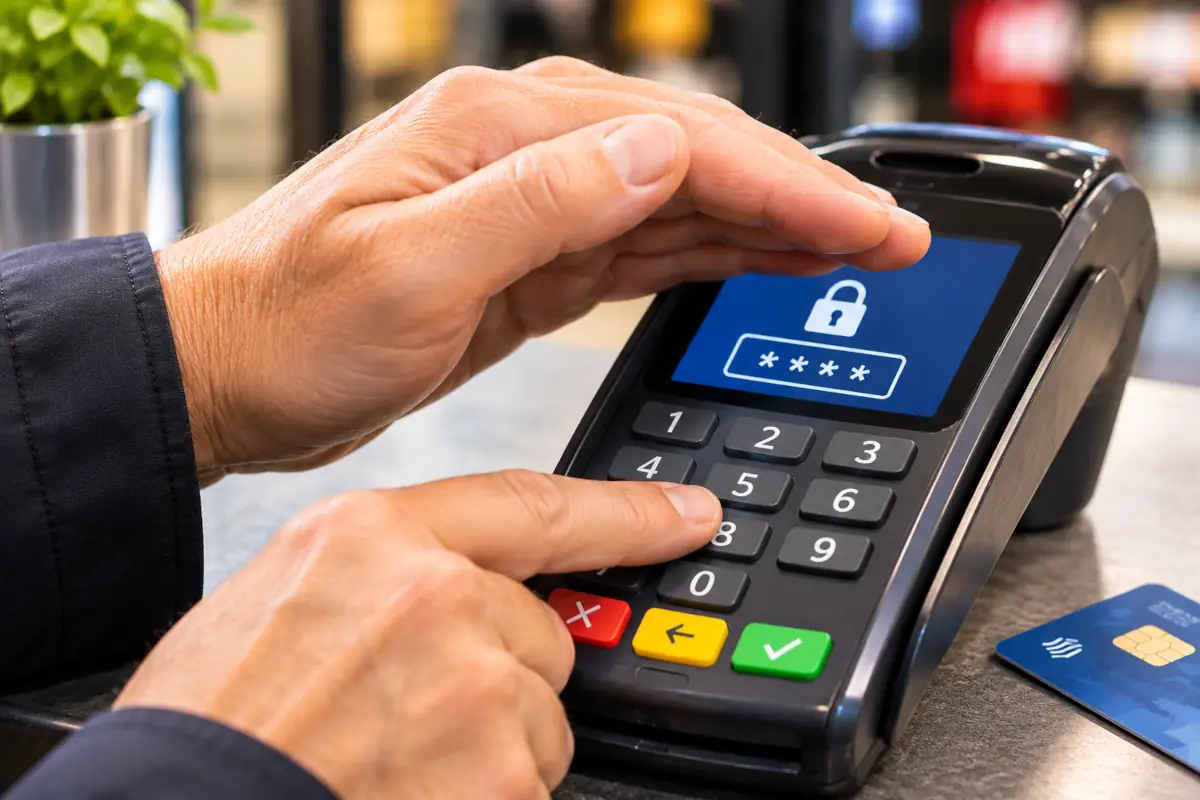 The most effective protection comes from combining several simple habits. No single accessory can protect against every scenario, particularly when fraud involves a compromised device, psychological manipulation and PIN theft. The aim is not to make all fraud impossible, but to reduce opportunities for exploitation and detect suspicious activity quickly.
ATMs and payment terminals located in monitored areas should be preferred. Before inserting a card, an unusual reader, a loose component or an unfamiliar keypad should prompt you to abandon the transaction. When entering your PIN, always covering the keypad reduces the effectiveness of hidden cameras or someone watching discreetly.
Your card should never be left out of sight during payment. Even brief handling may be enough to photograph visible information or use a fraudulent device. Any request to scan a card with a smartphone for supposed banking verification should be refused, especially if it comes from a message, phone call or application installed in a hurry.
Payment notifications offer a straightforward advantage: they shorten the delay between a suspicious transaction and your response. Appropriate transaction limits also reduce potential exposure if something goes wrong, although they do not replace blocking the card promptly. An RFID-blocking sleeve may offer reassurance against certain close-range reading attempts, but it does not protect against a fake payment terminal, an NFC relay application or PIN manipulation.
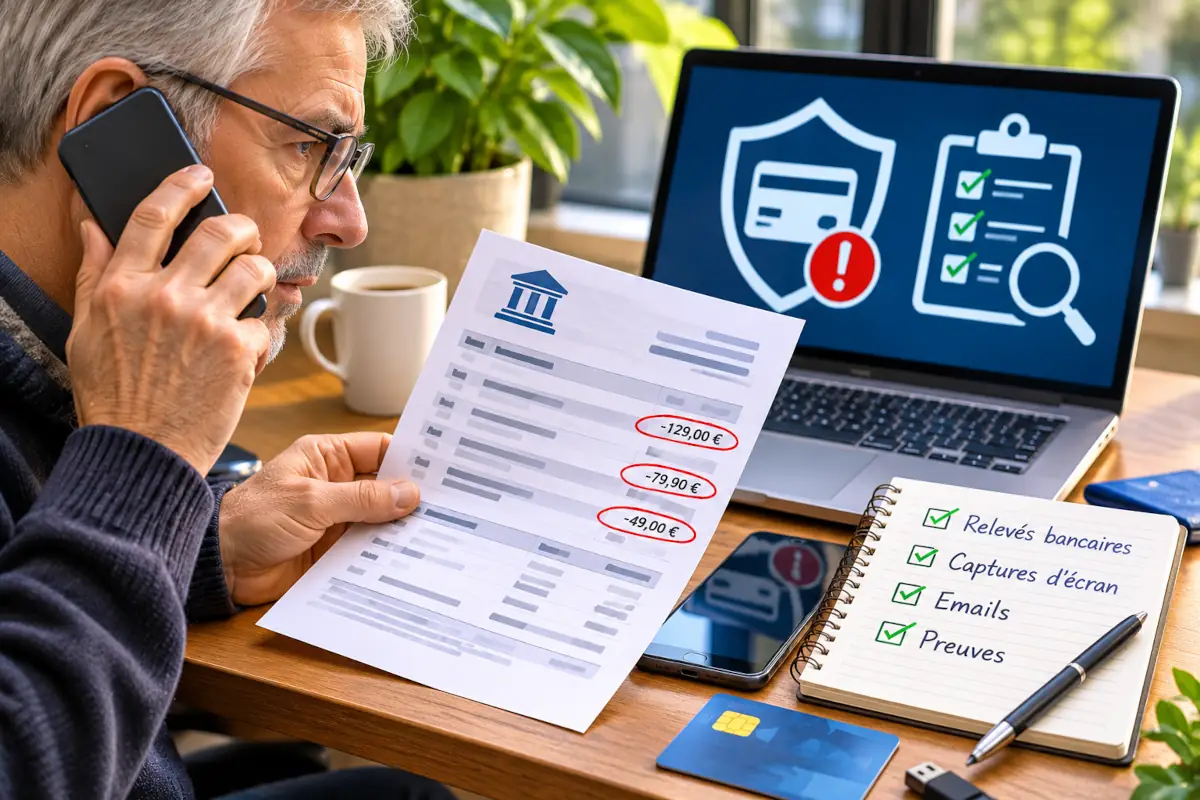 The priority is to stop the fraudulent activity, then document what happened. An effective payment dispute requires precise information: times, amounts, messages received, the location of the cash withdrawal or payment, and any photographs of a suspicious ATM. Rights, deadlines and reimbursement procedures vary between countries, making it important to contact your bank and the relevant authorities directly.
If a smartphone was involved, you should stop using the suspicious application. The phone may have acted as a relay, a channel for instructions or a means of carrying out fake verification. Any associated banking access should be secured, particularly if codes or login credentials were entered during the incident.
Reporting the incident is not only useful for your own case. It can help identify a tampered ATM, a fraudulent messaging campaign or an application used to deceive multiple victims. The more precise the evidence you preserve, the easier it becomes to understand the sequence of fraudulent activity and avoid making the same mistake again.
Bank card hacking and fraudulent use do not rely on a single technique. A card can be compromised without being stolen, but the possibilities for fraud depend on the data obtained, the role of the terminal, whether the PIN is involved and whether an active relay connection with the genuine card exists. The most useful precautions remain practical: protect PIN entry, refuse smartphone-based verification requests, monitor payments and act immediately when something suspicious occurs.
To strengthen your everyday precautions, you can consult our practical advice on avoiding scams or our guide to understanding and dealing with fraud. If you have already noticed a suspicious transaction, our dedicated assistance for fraud victims can help you organise the first steps.