Blog post: Online security
Hello and welcome to Scam Or Reliable!

Blog post: Online security

 Greenwashing is not always just an exaggeration in advertising. In some cases, environmental claims become a real trap to steer a purchase, justify a higher price or lower the consumer’s level of vigilance.
A website, advertisement or packaging may give the impression that a product is environmentally friendly, even though the claim remains vague, unverifiable or very partial. The risk is not only paying too much, but also making a decision based on misleading information.
Greenwashing refers to a situation where a company presents a more environmentally friendly image than it can actually substantiate. In its most visible form, this involves vague slogans, green colours, leaves on packaging or phrases such as “responsible”, “sustainable”, “good for the planet” or “climate neutral” without any serious explanation. The issue becomes more serious when this presentation is used to sell a product, avoid consumer questions or suggest a positive impact that does not exist.
The most misleading version does not always involve outright lies. It often relies on ambiguity. A company highlights a real but secondary detail, such as lighter packaging, to suggest that the entire product is exemplary. Another displays a pseudo-label that resembles an independent certification when it is in fact a self-created visual. Others emphasise a future commitment that is difficult to verify, turning a marketing message into an environmental guarantee.
In these situations, the consumer is no longer just buying a product or service. They are also buying a moral promise. This is precisely what makes greenwashing so effective: it influences price, product perception and the feeling of making a responsible choice.
Environmental arguments benefit today from a high level of trust. Many buyers want to reduce their impact, avoid certain products or support more responsible companies. This expectation is legitimate. However, it also creates an ideal environment for campaigns that exploit good intentions without providing sufficient evidence.
Greenwashing works particularly well because it relies on information asymmetry. The business knows its production chain, margins, limitations and the grey areas of its messaging. The consumer, on the other hand, often only sees a slogan, a pictogram, a compensation claim or a reassuring visual. The simpler and more emotional the message, the more it can hide the product’s real complexity.
It should also be noted that an “eco” argument can justify a higher price. When consumers believe they are buying a better-designed, less polluting or more durable product, they are often willing to pay more. If this added value is neither clear nor demonstrated, the environmental claim stops being useful information and becomes a potentially misleading marketing tool.
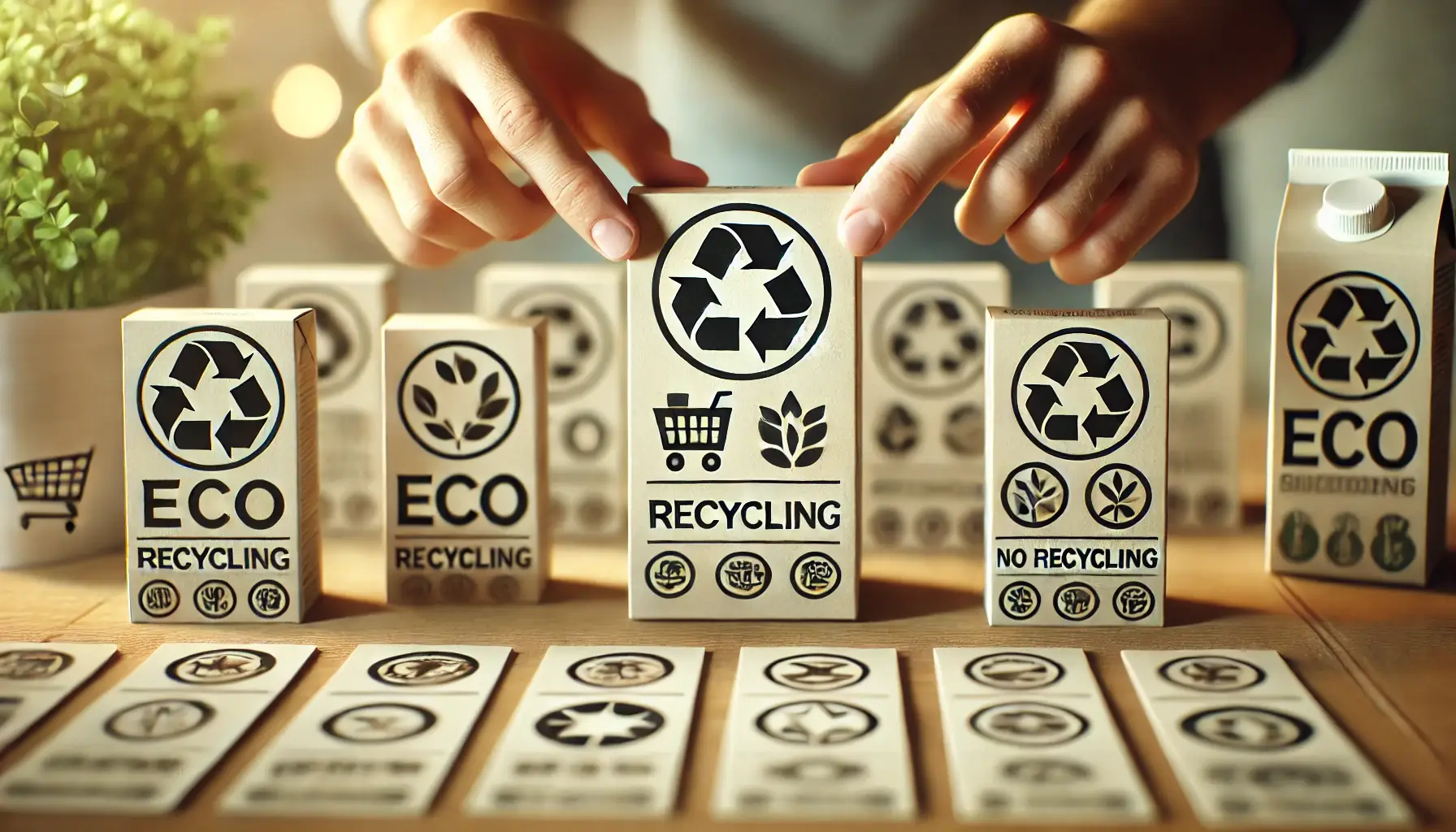 Not all questionable campaigns are the same, but certain patterns appear frequently. They create a generally positive impression while avoiding precise, comparable or verifiable information. Consumers then feel they understand, even though they lack the necessary details to make an informed judgement.
The issue is not only the wording used, but also the overall presentation. A campaign can be misleading without containing a clearly false statement, simply because the overall message creates an exaggerated or unbalanced impression.
Among the most misleading practices, fake labels deserve particular attention. Consumers naturally place more trust in a symbol that looks like a technical certification, especially if it is well integrated into packaging or a website. However, a label only has value if its origin, criteria and control body are clearly identified.
An invented logo, a generic seal or a phrase such as “eco approved” can produce the desired effect without providing any independent guarantee. By contrast, a genuine label must be verifiable. It should be based on public criteria, a clear methodology and governance that goes beyond the brand’s own communication.
This issue is important because fake labels act as a shortcut in decision-making. Consumers believe they have already verified the product’s reliability, when in fact they may only have validated a design element.
When faced with a “green” campaign, the goal is not to automatically distrust all environmental initiatives. However, certain signals justify a closer look. The more central the ecological claim is to the sale, the more precise and verifiable it should be.
A useful reflex is to ask a simple question: what exactly is being claimed, and how can it be verified? If the answer remains unclear, the claim should be treated with caution.
Consumers do not need to conduct a full environmental audit for every purchase. However, a few simple checks can reduce risks. First, distinguish between marketing language and genuinely useful information: composition, lifespan, reparability, recycled content, calculation method, certifying body and limits of the claim. The more precise the message, the easier it is to verify.
Next, check whether the claim applies to the whole product or only to one part. A company may highlight recyclable packaging while the product itself has other significant impacts. Similarly, a carbon offset argument does not necessarily reflect the real emissions linked to manufacturing, transport or use.
In the United Kingdom, guidance from Advertising Standards Authority (UK) explains how environmental claims should be clear and substantiated. In the United States, the Federal Trade Commission (US) provides “Green Guides” on environmental marketing claims. These resources do not assess each product individually, but they offer practical benchmarks.
 If you purchased a product or service based on a questionable environmental claim, the first step is to keep evidence. Screenshots, product pages, advertisements, emails, invoices, packaging visuals and terms of sale may all be useful. Without these, it becomes harder to demonstrate how the product was presented at the time of purchase.
You can then request written explanations from the seller or customer service. If the message is vague, contradictory or unsupported, reporting may be appropriate. In the United Kingdom, you can seek advice from Citizens Advice (UK) or report misleading practices to Report Fraud (UK). In the United States, complaints can be filed via the Federal Trade Commission (US).
It is also useful to compare the advertising message with what the product actually delivers. When the environmental argument is central to the sale, it becomes an important part of your purchasing decision. If it was misleading, it is not a minor detail.
Companies that genuinely make an effort have no interest in remaining vague. Credible communication specifies what is claimed, what is not covered, what evidence it is based on and what its limitations are. It avoids sweeping slogans, absolute promises and symbols used to replace proof.
By contrast, the most questionable campaigns often aim to create an immediate impression. They are meant to be felt before they are understood. This is why greenwashing as a scam is identified not only by misleading wording, but also by presentation that encourages consumers to draw quick conclusions.
Greenwashing becomes a trap when it turns a legitimate desire to consume more responsibly into a misleading sales tool. Fake labels, vague terms, exaggerated promises, poorly explained compensation or minor details presented as major innovations: in these cases, environmental messaging serves more to persuade than to inform. The right approach is to ask for simple evidence, distinguish marketing from facts and avoid paying more for a promise that remains unclear.
To go further, you can also read our essential tips to avoid online traps, our guide to responding to fraud and misleading practices and our selection of useful tools to check and report suspicious websites.
To help you, we also offer the following tools:



Scam Or Reliable: The free and independent reference dedicated to anti-fraud information, the analysis of deceptive practices and the protection of consumers against online risks. Our team publishes articles, alerts and educational content to help internet users spot signs of scams, understand fraud mechanisms and adopt the right reflexes when faced with digital scams.
Its goal: to contribute to the prevention of scams, phishing, fake websites, impersonation and online commercial manipulation by providing clear, rigorous and useful content based on the analysis of verifiable signals, testimonies and reliable sources.
Warnings: The information presented on this blog is provided for informational and preventive purposes only. It does not constitute official recommendations or personalised legal, financial or technical advice. It must be verified with the relevant organisations, services or contacts depending on the situation. We are not responsible for errors, omissions or inappropriate use of the information provided on this site. If you notice any inaccuracy, please let us know.