Blog post: Online security
Hello and welcome to Scam Or Reliable!

Blog post: Online security

 Fake puppy and fake breeder scams have seen an alarming surge in recent years. Scammers create fake ads for dogs or cats for sale, use photos stolen from legitimate breeders or shelters, and entice buyers with attractive prices. Driven by emotion and the desire to welcome a pet into their home, many victims agree to pay a deposit or veterinary fees, only to find that no animal is ever delivered. This fraud, particularly widespread on classified ad platforms and social media, causes thousands of financial and emotional losses each year.
The scheme is carefully designed to exploit the natural trust many people have in fellow animal lovers. Fraudsters are experts at playing on emotions and use appealing ads that feature puppies or kittens of popular breeds. They promise a pet that is “very affectionate,” “used to children,” or “perfect for an apartment,” always at a below-market price.
The rarer or more popular the animal, the higher the demand, and the more likely a victim is to accept an attractive price. Fraudsters exploit this emotional pressure by pretending to sell highly sought-after animals, which are sometimes impossible to find from a reputable breeder without a waiting list.
Fake breeders use well-practised techniques to build trust. However, several signs can help you quickly identify a scam attempt. Consumer protection agencies and official services regularly issue warnings about this issue.
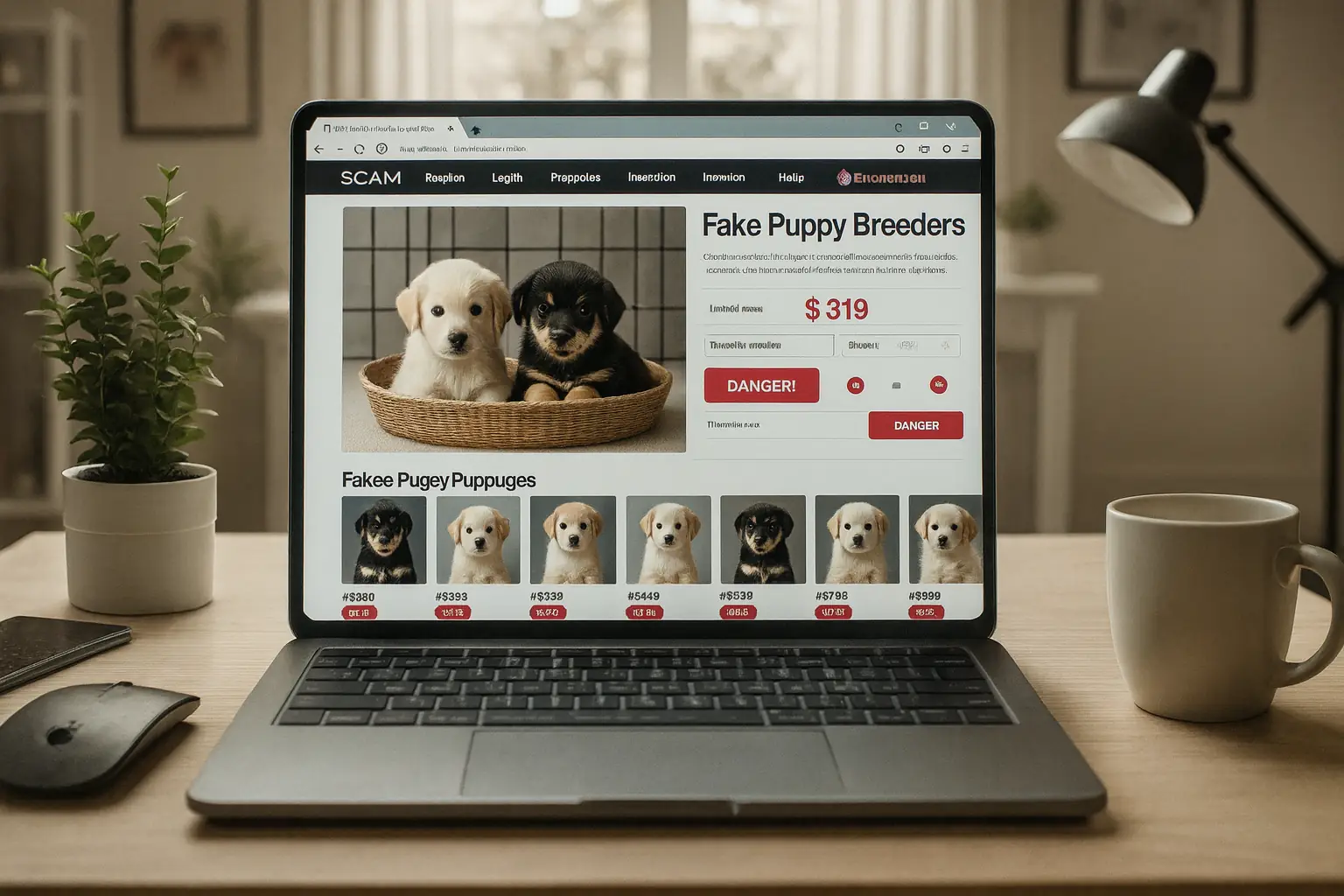
Many scammers add a second stage to the fraud: the use of a fake pet delivery service. Once the deposit is paid, a fake “specialised transporter” takes over and demands additional fees.
Adopting a pet is an emotional decision. The desire to save a puppy or welcome a companion can make buyers less vigilant. Fraudsters understand this well and play on several psychological levers.
If you think you have been the victim of a fake breeder or have sent money, it is essential to act quickly. Authorities and reporting agencies recommend several steps.
A few simple rules can significantly reduce the risk of being scammed and ensure a responsible adoption. Reputable professional breeders follow transparent procedures and will refuse any rushed payment.
To learn more about this topic and discover other practical tips against online fraud, several detailed articles are available on our site. They explore both common scams and concrete ways to protect yourself daily.
Fake puppy and fake breeder scams are one of the most widespread internet frauds today. Using enticing ads, stolen photos, and emotional scenarios, scammers manage to deceive many buyers. By refusing to make any advance payments, verifying the seller’s identity, and insisting on a physical meeting before adoption, it is possible to avoid the vast majority of these traps. If in doubt, seeking advice from a veterinarian, a shelter, or a professional breeder can also help you make the right decision.
Animigo :
"Animigo" is a website dedicated to pets that offers a whole range of high-quality natural products specially designed for our four-legged friends.
Evaluation, Advice and Testimonials on Animigo! (90-Day Money-Back Guarantee!)



Scam Or Reliable: The free and independent reference dedicated to anti-fraud information, the analysis of deceptive practices and the protection of consumers against online risks. Our team publishes articles, alerts and educational content to help internet users spot signs of scams, understand fraud mechanisms and adopt the right reflexes when faced with digital scams.
Its goal: to contribute to the prevention of scams, phishing, fake websites, impersonation and online commercial manipulation by providing clear, rigorous and useful content based on the analysis of verifiable signals, testimonies and reliable sources.
Warnings: The information presented on this blog is provided for informational and preventive purposes only. It does not constitute official recommendations or personalised legal, financial or technical advice. It must be verified with the relevant organisations, services or contacts depending on the situation. We are not responsible for errors, omissions or inappropriate use of the information provided on this site. If you notice any inaccuracy, please let us know.